

Email & WhatsApp Engagement Improves as Inbox Noise Drops

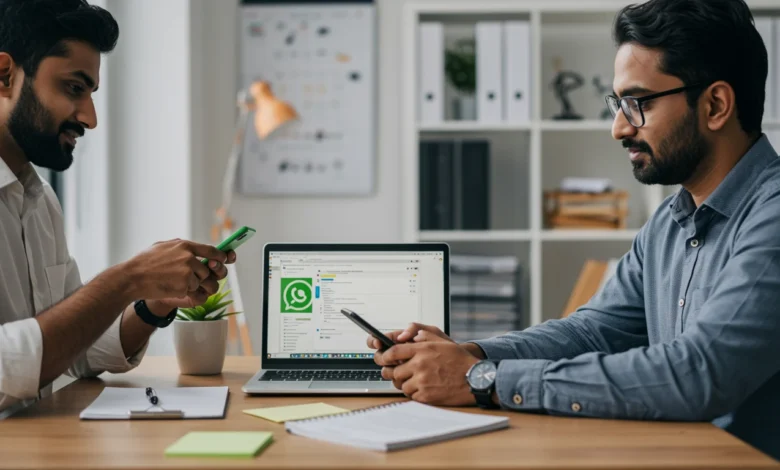
Email & WhatsApp engagement patterns have shifted as crowded inboxes reduce visibility for traditional email campaigns. According to recent reports, businesses are seeing stronger response rates on WhatsApp, driven by real-time delivery, conversational formats, and reduced competition compared to email and other channels.
Key Developments
Recently, marketers have reported declining engagement from email newsletters as inbox volumes continue to rise.
Emails are often delayed, ignored, or filtered, reducing open and click-through rates.
At the same time, WhatsApp engagement has increased across industries.
Messages appear instantly, trigger notifications, and are typically read within minutes.
According to recent reports, WhatsApp messages record significantly higher open rates than email.
Click-through and response rates are also stronger due to interactive features and conversational delivery.
Industry & Expert Context
Industry analysts attribute this shift to how users interact with messaging platforms.
WhatsApp messages arrive in personal conversation threads, not promotional folders.
Research consistently shows WhatsApp open rates averaging close to 98 percent.
By comparison, email open rates typically range between 20 and 25 percent, with much lower response levels.
WhatsApp automation has further accelerated adoption.
Businesses now automate updates, confirmations, and reminders while maintaining a personalised experience through segmentation.
WhatsApp’s position as a primary messaging platform across Asia, Europe, and Latin America has reinforced its role in customer communication.
Adoption in additional markets continues as consumers favour chat-based interactions.
Why This Matters
As email & WhatsApp engagement diverges, businesses must reassess communication strategies.
Relying solely on email limits reach in an increasingly noisy inbox environment.
For customers, WhatsApp offers faster, clearer communication.
Messages feel direct, timely, and relevant, improving trust and responsiveness.
For businesses, higher engagement translates into operational efficiency.
Faster responses reduce support load, improve conversions, and strengthen customer relationships.
This shift also highlights the importance of consent and compliance.
WhatsApp-based communication requires opt-ins, reinforcing trust and message quality.
What Happens Next
According to recent trends, businesses are expected to adopt blended communication strategies.
Email will remain useful for long-form content, while WhatsApp supports time-sensitive engagement.
Automation and analytics will continue shaping WhatsApp marketing.
Detailed insights into opens, clicks, and responses allow continuous optimisation.
As inbox noise persists, conversational platforms are likely to gain prominence.
Channels that respect attention and deliver immediacy may define future engagement standards.
Final Takeaway
Email & WhatsApp engagement reflects a broader shift toward real-time, conversational communication.
As inbox noise grows, platforms that deliver clarity, speed, and relevance are gaining advantage.
As an industry observer, Digilogy tracks how evolving communication preferences influence digital engagement strategies and customer behaviour. For ongoing updates and insights, visit the Digilogy News page.