

FMCG Brands Shift Focus to Sustainability in 2026 Campaigns

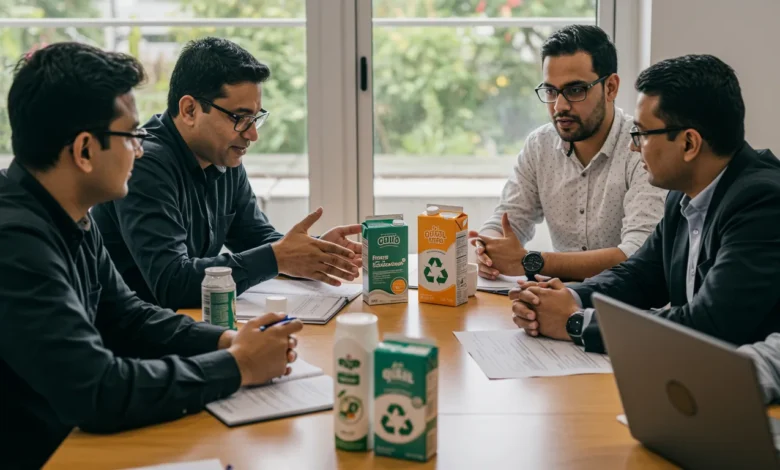
According to recent reports, FMCG sustainability campaigns in 2026 are evolving beyond purpose-led messaging toward measurable proof points and practical design. Brands are increasingly combining sustainability claims with packaging innovation, print-led touchpoints, and omnichannel strategies to create credibility, relevance, and stronger shopper connections.
Key Developments
FMCG brands are placing greater emphasis on sustainability proof points, including recyclable packaging, refillable formats, and transparent ingredient sourcing.
Recent industry reports highlight a renewed role for physical channels such as print, packaging, and in-store materials as part of broader multichannel strategies.
Rather than relying solely on digital-first storytelling, brands are using packaging and printed formats to communicate sustainability claims clearly at the point of purchase.
Smart packaging is also gaining attention, blending physical design with data, traceability, and clearer product information.
Industry & Expert Context
Industry observers note that FMCG sustainability campaigns in 2026 reflect a shift from aspiration to accountability. Consumers increasingly expect claims to be backed by visible actions rather than abstract promises.
Certifications such as Fair Trade, USDA Organic, Energy Star, and B Corp status are being used to build trust with both consumers and retailers.
Reports from marketing and packaging specialists indicate an “offline comeback,” where print, catalogues, and in-store experiences cut through digital fatigue.
Marketing strategies are moving toward seamless omnichannel execution, connecting physical brand moments with digital engagement rather than treating them as separate efforts.
Digital marketing agencies tracking FMCG trends, including Digilogy, note that sustainability messaging is becoming more effective when paired with tangible, in-store validation.
Why This Matters
For FMCG brands, sustainability has shifted from a brand differentiator to a baseline expectation.
Consumers increasingly want eco-conscious products that do not involve higher prices or performance compromises.
For retailers, clear sustainability proof points simplify merchandising and build shopper confidence at shelf level.
For the industry, the focus on practicality signals a move away from greenwashing toward measurable impact and operational transparency.
What Happens Next
FMCG sustainability campaigns in 2026 are expected to place greater emphasis on lifecycle transparency, including sourcing, packaging disposal, and reuse models.
Refill formats, low-waste packaging, and simplified sustainability communication are likely to become standard across mass-market categories.
Brands are also expected to invest more in packaging design and print-led storytelling that integrates smoothly with digital platforms.
As consumer scrutiny increases, sustainability strategies will be judged less on messaging and more on execution consistency.
FAQs: FMCG Sustainability Campaigns 2026
H3: What is changing in FMCG sustainability campaigns for 2026?
Brands are shifting from purpose-led messaging to proof-based sustainability backed by packaging, certifications, and practical product changes.
H3: Why is print and packaging gaining importance again?
Physical touchpoints cut through digital noise and allow brands to communicate sustainability claims directly at the point of purchase.
H3: Do consumers still pay a premium for sustainable FMCG products?
Increasingly, consumers expect sustainability without added cost, making practicality more important than premium positioning.
Final Takeaway
FMCG sustainability campaigns in 2026 signal a clear industry shift toward credibility, practicality, and measurable action. As brands balance environmental responsibility with consumer expectations, thoughtful packaging, proof points, and integrated marketing will define successful execution.
Digilogy tracks these industry developments closely. For daily updates and insights, visit the Digilogy News page.