India’s Online Travel Market Rebounds with 18% Growth YoY in 2025

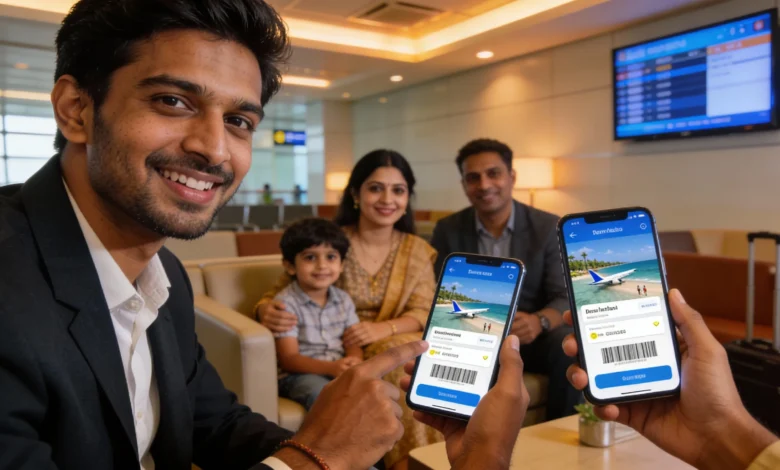
Recently, India’s online travel market recorded a strong rebound, posting 18% year-on-year growth in 2025. According to recent reports, higher smartphone penetration, policy support, and rising leisure demand have accelerated digital travel bookings, signalling sustained momentum across domestic and outbound travel segments.
Key Developments
India’s online travel market growth has been supported by a combination of policy measures and improving financial performance across major platforms.
Earlier this year, the Union Budget announced a modified UDAN scheme aimed at expanding regional connectivity, alongside investments in helipads for hilly districts and the development of new tourist destinations. These initiatives are expected to strengthen last-mile access and regional travel flows.
The government also raised the TCS threshold under the Liberalised Remittance Scheme, reducing friction for overseas travel packages and improving affordability for outbound travellers.
Industry earnings reflect this recovery. MakeMyTrip reported strong profitability in the latest quarter, indicating improved booking volumes, healthier margins, and renewed consumer confidence.
Industry & Expert Context
Analysts tracking India’s online travel market growth point to digital convenience as a central driver. Consumers increasingly prefer booking flights, hotels, and transport services online due to transparent pricing, flexible cancellations, and faster refunds.
Rising internet penetration and smartphone adoption have expanded the reach of online travel platforms beyond metros. This digital access has enabled service providers to deepen penetration in smaller cities while diversifying offerings across flights, rail, buses, and local transit.
Leisure destinations showed particular resilience. Srinagar recorded its highest-ever bookings, while Goa continued to attract more travellers than in the previous year, retaining its position as India’s most popular holiday destination.
At the same time, travel demand is spreading beyond major metros. Tier-2 cities such as Indore, Lucknow, Patna, Surat, and Kochi reported a meaningful rise in inbound traffic, reflecting changing travel aspirations across regional India.
Technology innovation is also reshaping the sector. Paytm recently introduced an AI-powered travel platform offering personalised recommendations, conversational booking, and subscription-based travel benefits aimed at improving reliability and transparency.
Why This Matters
For consumers, the rebound in India’s online travel market growth translates into greater choice, competitive pricing, and improved service quality. Digital platforms are reducing friction across the travel journey, from discovery to post-booking support.
For travel companies, the shift underscores the importance of mobile-first experiences, AI-driven personalisation, and multi-modal integration. Growth is no longer limited to peak seasons or metro markets.
For the broader economy, rising online travel activity supports tourism, hospitality, transport, and regional development. Increased travel spending also creates downstream opportunities for local businesses and service providers.
What Happens Next
Looking ahead, India’s online travel market growth is expected to remain resilient as infrastructure investments, digital adoption, and disposable incomes continue to rise.
Platforms are likely to focus more on Tier-2 and Tier-3 cities, AI-enabled planning, and bundled offerings that combine transport, accommodation, and experiences.
As competition intensifies, differentiation will increasingly depend on trust, service reliability, and seamless customer experience rather than discounts alone.
Final Takeaway
India’s online travel market growth of 18% in 2025 reflects a clear recovery and a structural shift toward digital-first travel planning. With policy support, expanding regional demand, and technology-led innovation, the sector is positioned for sustained expansion.
Digilogy tracks these developments closely, analysing how digital platforms, consumer behaviour, and policy initiatives are reshaping India’s online travel ecosystem.