

Google Prediction Markets Policy Launch Signals Major Shift in AI Search

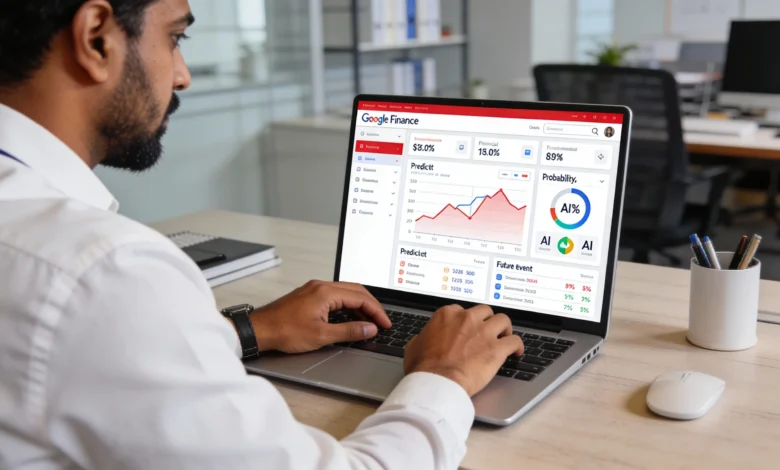
Recently, Google Prediction Markets Policy Launch has marked a notable shift in how future-focused data appears across search and finance products. Google has begun integrating regulated prediction market data into Google Finance, reflecting a broader move toward AI-powered, real-time forecasting within search experiences.
Key Developments
Google has confirmed that prediction market data from regulated platforms will be displayed within Google Finance search results. Users can now ask forward-looking questions and see real-time probability estimates derived from active markets.
This integration focuses on exchange-listed event contracts, including economic indicators, policy outcomes, and major current events. The data updates dynamically, allowing users to track how probabilities change over time.
Alongside this, Google announced an update to its advertising policies. Ads related to prediction markets are now permitted in the United States—but only for federally regulated entities. Unregulated or offshore platforms remain prohibited, reinforcing Google’s compliance-first approach.
Industry & Expert Context
Prediction markets aggregate crowd-based expectations, often described as the “wisdom of the crowd.” Platforms such as Kalshi, a CFTC-regulated exchange, and Polymarket, a blockchain-based platform, are among the data sources appearing in Google Finance.
The update is part of a broader AI-driven revamp of Google Finance, powered by Gemini models. New features include “Deep Search,” which synthesizes multiple data points into a single response, and enhanced live earnings insights.
From an industry perspective, this move positions prediction markets closer to mainstream financial tools rather than niche or speculative products. Analysts note that Google’s involvement significantly boosts credibility and visibility for regulated forecasting data.
Why This Matters
The Google Prediction Markets Policy Launch changes how users access information about future outcomes. Instead of relying solely on expert commentary or static forecasts, users can now see market-implied probabilities directly in search.
For businesses and marketers, this signals a shift in how intent and sentiment are interpreted. Real-time probability data may influence investment research, media narratives, and even public opinion tracking. It also reinforces Google’s direction toward zero-click, AI-assisted answers, where insights appear directly on the results page.
Regulatory safeguards are central to this rollout. By limiting ads and data sources to compliant entities, Google aims to reduce fraud risks and maintain trust in AI-generated financial insights.
What Happens Next
According to recent reports, the rollout will expand gradually, beginning with limited access and scaling to more users over time. Additional event categories and deeper historical trend views are expected as the system matures.
Policy-wise, further refinements to advertising and data eligibility are likely as regulators and platforms adapt to increased visibility. Industry watchers expect more scrutiny around how prediction data is framed to avoid confusion with gambling products.
Final Takeaway
The Google Prediction Markets Policy Launch underscores Google’s growing role in shaping how future-oriented information is consumed. By combining AI, regulated market data, and search visibility, Google is redefining forecasting as a core search experience.
As an industry observer,Digilogy tracks these developments closely to understand how AI-driven data visibility impacts search behavior, content strategy, and digital trust signals across industries.