

Google’s March 2026 Core Update: What Indian Websites Need to Fix Now

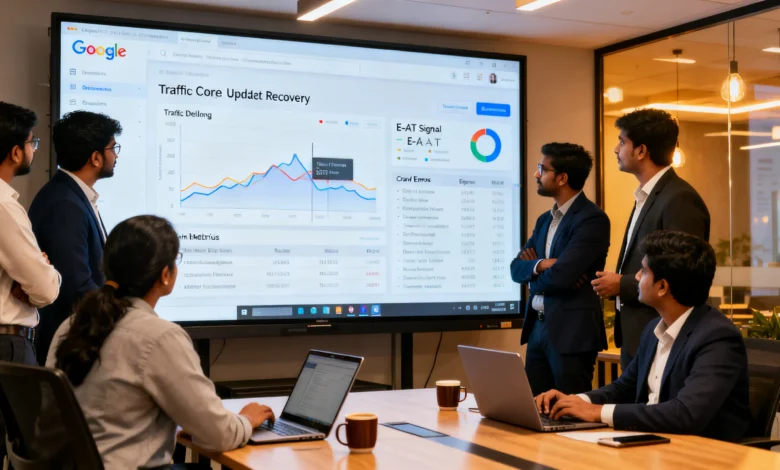
The Google March 2026 Core Update is pushing websites to improve content quality, originality, and trust signals more aggressively than before.
For Indian websites, the update appears to reward experience-led content, stronger E-E-A-T, topical depth, and technical performance, while reducing visibility for scaled low-value pages built mainly to rank.
What the Google March 2026 Core Update Signals
The latest update reinforces Google’s broader direction toward rewarding content that is genuinely useful, original, and experience-based.
This means websites relying on repetitive SEO pages, shallow AI-assisted content, or generic rewrites may see declines, while niche-focused sites with deeper expertise may benefit.
The key shift is not against AI itself. The stronger signal is against unhelpful content, regardless of how it was created.
Why Indian Websites May Be Feeling the Impact
Many Indian websites still depend on low-cost templates, bloated themes, thin landing pages, and mass-produced SEO content.
That creates problems across both content quality and technical performance. If pages lack original insights, author trust, and fast mobile usability, they become more vulnerable during broad core updates.
This is especially relevant for businesses that built large numbers of pages without adding real differentiation.
Key Fixes Indian Websites Should Prioritise
The strongest recovery path is not quick patchwork. It is a quality-focused rebuild of what the website offers users.
Key areas to improve include:
- Removing thin or duplicate pages
- Updating outdated or generic content
- Adding first-hand examples and real expertise
- Improving author trust signals
- Fixing speed, indexing, and mobile issues
- Building stronger topical authority
These actions align more closely with how Google now evaluates usefulness and credibility.
Remove Low-Value and Thin Content
One of the clearest risks is content that exists mainly for ranking but offers no unique value.
This can include:
- Thin AI-generated pages
- Rewritten SEO articles with no new insights
- Programmatic pages with very little substance
- Duplicate or near-duplicate location and service content
Indian websites affected by the Google March 2026 Core Update may need to prune, merge, or heavily upgrade these pages.
Add Experience-Based E-E-A-T Signals
Google continues to reward content that reflects Experience, Expertise, Authoritativeness, and Trustworthiness.
For Indian businesses and publishers, this means content should include:
- Real use cases
- Practical examples
- Case-based explanations
- Expert commentary
- Clear author bios and credentials
This is especially important in sensitive sectors, but the broader direction suggests E-E-A-T now matters across many industries, not only YMYL topics.
Original Information Gain Matters More
Another strong theme is information gain.
Pages that simply repeat what other websites already say may struggle. Pages that add something useful are more likely to perform better.
That added value can come from:
- Original observations
- Proprietary data
- Local context
- Case studies
- First-hand experience
- Clearer explanations than competing pages
For Indian websites, local examples and real-world implementation details can strengthen article value significantly.
Topical Authority Now Outweighs Broad Publishing
The update also appears to reward websites that go deeper in a niche instead of covering unrelated topics too broadly.
In practical terms, this means:
- Depth is stronger than breadth
- Specialisation is stronger than generalisation
- Topic clusters are stronger than scattered publishing
A focused site that consistently publishes useful content in one domain may now outperform a broader site with weak topical depth.
Technical SEO Still Matters for Recovery
Content alone is not enough if the user experience is weak.
Indian websites should prioritise:
- Faster loading speeds
- Better mobile responsiveness
- Cleaner site architecture
- Crawl and indexing fixes
- Reduced code bloat
- Better template performance
This matters because many businesses still operate on low-budget websites that look acceptable visually but perform poorly in real usage.
A cheaper build can create long-term ranking and conversion losses if it slows down the site or damages usability.
Which Websites Are Most Commonly Affected
Certain site patterns are more exposed during updates like this.
Commonly impacted areas include:
- Low-quality affiliate websites
- Sites using AI to rewrite content at scale
- Websites with thin service or location pages
- Broad blogs with little niche focus
- Websites lacking author verification or trust signals
- Sites with weak mobile performance
These patterns often overlap, which makes recovery harder unless both content and technical issues are addressed together.
What Website Owners Should Do Now
The right response is a structured audit, not reactive editing.
A practical action plan includes:
- Review analytics to find pages with major traffic drops
- Identify thin, duplicated, or outdated content
- Add original visuals, examples, and expert input
- Improve author pages and trust elements
- Strengthen internal linking and topic clusters
- Fix mobile speed and page experience issues
This approach helps websites align better with Google’s quality systems over time.
Why This Matters for the Indian Market
For Indian businesses, the Google March 2026 Core Update is also a reminder that low-cost publishing shortcuts can become expensive later.
A site built around cheap templates, mass SEO content, and weak optimization may save money upfront, but it can lose visibility, leads, and trust when Google recalibrates ranking systems.
That makes quality-led SEO, strong website foundations, and genuine content differentiation more important than ever.
FAQs
- What is the Google March 2026 Core Update?
It is a broad Google search update that re-evaluates content quality, originality, trust, and user experience across websites. - Does Google penalise AI content in this update?
No. The stronger signal is against low-value or unhelpful content, not AI itself. - What should Indian websites fix first?
They should start by removing thin content, improving E-E-A-T, adding original insights, and fixing technical SEO issues. - What is information gain in SEO?
Information gain means adding something genuinely new or more useful than what already exists in search results. - Why is topical authority important now?
Google appears to reward websites that go deeper in one niche instead of publishing shallow content across many unrelated topics. - Can technical SEO affect recovery after a core update?
Yes. Slow speed, poor mobile experience, and crawl issues can weaken recovery even if content quality improves.
Final Takeaway
The Google March 2026 Core Update is not just another ranking fluctuation. It reinforces a deeper standard for what Google considers genuinely useful content.
For Indian websites, the path forward is clear: remove low-value pages, add first-hand expertise, improve trust signals, and strengthen technical SEO foundations.
Digilogy tracks these industry developments closely. For daily updates and insights, visit the Digilogy News page.