

Google March 2026 Core Update Is Rewriting SEO Rules for Indian Brands

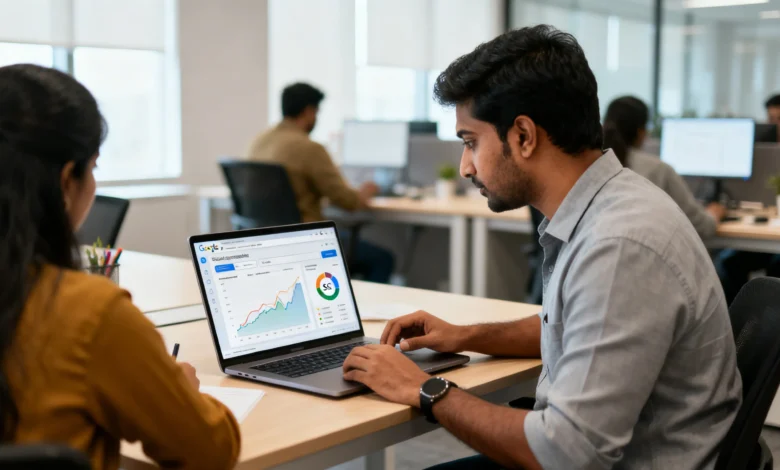
Recently, Google rolled out the Google March 2026 Core Update, triggering ranking shifts across industries. Early analysis suggests the update significantly strengthens signals around experience-driven content, originality, author credibility, and real user value.
For Indian businesses and publishers, this update reinforces a major shift: SEO success now depends less on keyword coverage and more on real expertise, authentic insights, and user-focused content.
What Actually Changed in the Google March 2026 Core Update
Google core updates recalibrate how ranking systems evaluate content usefulness. Rather than targeting a single tactic or niche, this update reweights signals across the entire ranking ecosystem.
The update now places stronger emphasis on:
- Content originality and information gain
- Alignment with real search intent
- Author expertise and trust signals
- Domain credibility and site consistency
- Technical performance and user experience
For Indian publishers and brands, the outcome is clear: generic or scaled content is losing visibility, while expert-driven content is gaining ground.
Experience-Led SEO Now Outranks Theory-Driven Content
One of the biggest shifts introduced by the Google March 2026 Core Update is the prioritization of first-hand experience.
Google now evaluates whether the content creator has actually used, tested, or worked with the subject they are discussing.
Examples include:
- Product reviews requiring original photos or testing insights
- Service pages including real project examples or case studies
- Tutorials demonstrating step-by-step implementation
Content that simply summarizes existing information without new insights is increasingly less competitive in search results.
AI Content Detection Has Become More Advanced
Google’s ranking systems have become more effective at distinguishing helpful AI-assisted content from mass-produced AI pages.
The algorithm now evaluates “information gain”, meaning:
- Does the page introduce new knowledge?
- Does it provide unique perspectives or original data?
- Does it improve the web’s understanding of the topic?
Websites publishing thin or repetitive AI-generated content are seeing reduced visibility after the update.
E-E-A-T Signals Now Apply Across All Industries
Previously, Experience, Expertise, Authoritativeness, and Trustworthiness (E-E-A-T) primarily influenced rankings for YMYL topics such as health and finance.
With the Google March 2026 Core Update, these signals now apply broadly across nearly all content categories.
Search systems increasingly evaluate:
- Verified author credentials
- Author profiles and professional background
- Editorial review processes
- Real-world expertise demonstrated in the content
Recent industry observations indicate that a growing share of top-ranking pages now include clear author attribution and expertise signals.
Hyper-Local Expertise Is Becoming a Key Ranking Factor
For Indian brands, one of the most significant implications of the update is the growing importance of local expertise.
Google’s ranking systems increasingly prioritize content that reflects:
- Regional knowledge
- Local market insights
- Geo-specific data and trends
This means businesses targeting Indian audiences should produce regionally relevant content rather than relying on generic global advice.
Behavioral Signals Are Playing a Larger Role
User interaction signals are also becoming more influential in determining rankings.
Search systems analyze behavioral indicators such as:
- Time spent on page
- Engagement with content
- Click-through rates from search results
- Return visits and brand familiarity
Content that genuinely satisfies user intent tends to generate stronger engagement signals, reinforcing its visibility in search results.
Technical Performance and Core Web Vitals Matter More
Technical SEO remains a foundational ranking factor, and Core Web Vitals are now more critical than ever.
Key performance metrics include:
- Largest Contentful Paint (LCP) – loading speed of main page elements
- Interaction to Next Paint (INP) – responsiveness to user actions
- Cumulative Layout Shift (CLS) – visual stability during page loading
Poor technical performance can negatively impact rankings and user experience, particularly on mobile devices.
What Indian Brands Should Do Next
To adapt successfully to the Google March 2026 Core Update, businesses should focus on improving both content credibility and user experience.
Recommended actions include:
Audit Content for Originality
Evaluate whether your content adds new insights, real examples, or proprietary data rather than simply rephrasing existing material.
Strengthen Author Credibility
Create detailed author pages highlighting professional expertise, credentials, and industry experience.
Focus on Local Relevance
Develop content that addresses India-specific challenges, trends, and consumer behavior.
Improve Technical SEO
Optimize Core Web Vitals, page speed, accessibility, and mobile performance to ensure a smooth user experience.
Why the March 2026 Update Signals a Long-Term SEO Shift
The Google March 2026 Core Update continues a broader trend in search: rewarding genuine expertise, original information, and trustworthy sources.
As Google’s ranking systems evolve, the advantage will increasingly go to organizations that demonstrate real knowledge, strong editorial processes, and meaningful contributions to the web’s information ecosystem.
According to industry observers including analysts at Digilogy, the update reinforces the importance of experience-led SEO strategies rather than scale-driven content production.
FAQs
What is the Google March 2026 Core Update?
The Google March 2026 Core Update is a broad algorithm update that adjusts how search rankings evaluate content quality, experience, expertise, and user value across websites.
Why did rankings drop after the March 2026 Google update?
Rankings may drop if a website relies on generic, AI-generated, or low-originality content. The update favors pages with real expertise, first-hand insights, and stronger E-E-A-T signals.
Does the March 2026 Core Update target AI content?
The update does not ban AI content, but it filters low-effort mass-generated pages. Helpful AI-assisted content that adds original insights and expertise can still perform well.
What is E-E-A-T and why is it important now?
E-E-A-T stands for Experience, Expertise, Authoritativeness, and Trustworthiness. Google now applies these signals across almost all content types, not only YMYL topics.
Are Core Web Vitals important after the update?
Yes. Core Web Vitals such as LCP, INP, and CLS continue to influence rankings by measuring real user experience, including loading speed, responsiveness, and visual stability.
Will this update affect all industries?
Yes. The Google March 2026 Core Update is a broad algorithm change affecting all industries, including e-commerce, SaaS, digital marketing, education, and local businesses.
How often does Google release core updates?
Google typically releases several core updates each year, and they can significantly reshape rankings across search results.
Final Takeaway
The Google March 2026 Core Update highlights a clear direction for the future of search: quality, authenticity, and expertise now outweigh pure keyword optimization.
For brands in India, the opportunity lies in creating experience-driven content that reflects real knowledge and genuine value for users.
Businesses looking to strengthen their search visibility can explore strategies through Digilogy’s SEO expertise, or Contact Digilogy today to learn how modern SEO practices align with evolving Google algorithms.