

Meta’s Attribution Update: How the New Changes Impact Your Reels Campaigns

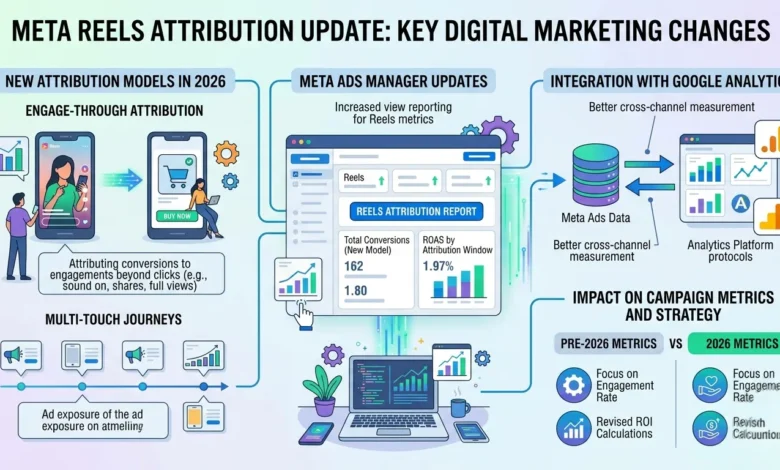
Meta has rolled out significant changes to its attribution system in March 2026, altering how conversions are reported across its advertising platform. This update, while not affecting the actual performance of campaigns, is reshaping how marketers interpret and measure results. Here’s what businesses need to know about the shift to “click-through” and “engage-through” attribution and how it will impact Reels-heavy campaigns.
What’s Changing?
The most notable changes to Meta’s attribution model are:
- Click-through Attribution: Previously, Meta’s click-through attribution included conversions linked to social actions such as likes, comments, shares, and profile visits. As of March 2026, this attribution method now exclusively tracks conversions triggered by actual link clicks. This shift aligns Meta’s tracking closer to third-party analytics platforms like Google Analytics, where only link clicks are counted as conversions.
- Engage-through Attribution: Meta has redefined its “engaged-view” metric. Under the new system, “engage-through” attribution will now include:
- 5-second video view conversions
- Social interactions like likes, shares, comments, and saves
This expansion of the engage-through category allows marketers to capture more data regarding how users engage with content before deciding to convert, while still reflecting the platform’s fast-paced, swipe-heavy nature.
Why Is Meta Making These Changes?
Meta’s new attribution approach reflects the evolving nature of consumer behavior, particularly on platforms like Reels. Users consume short-form vertical videos quickly, often making decisions or engaging with content within seconds. According to Meta’s own data, 46% of purchase conversions on Reels occur within the first two seconds. Therefore, shortening the attribution window from 10 seconds to 5 makes more sense in aligning with users’ quicker decision-making.
Additionally, these changes aim to minimize discrepancies between Meta’s reporting and third-party analytics tools. Historically, differences in how conversions were attributed led to confusion for marketers comparing data from Meta Ads Manager and external platforms like Google Analytics. The new framework creates a clearer division between direct link-driven conversions and broader social interactions.
What Does This Mean for Marketers?
As a result of these updates, advertisers can expect to see:
- A decrease in click-through conversions: As likes, shares, and other social engagements move to the engage-through category, click-through conversions will drop. However, this is simply a reclassification and does not mean a decrease in overall performance.
- An increase in engage-through attributed conversions: Shorter videos on Reels will now qualify for attribution as engage-through conversions, leading to a higher volume of conversions attributed to social engagement rather than direct clicks.
Brands should monitor their performance carefully during this transition. Meta’s updated reporting will provide a clearer picture of how various interactions drive conversions, allowing marketers to optimize their campaigns more effectively.
How Should Advertisers Adapt to This New Attribution System?
To adjust to the changes, advertisers should:
- Revisit attribution settings: Ensure that you capture the full value of social engagements by switching to the new engage-through attribution metric.
- Review CPA/ROAS targets: Since reporting will shift, marketers may need to adjust their targets and expectations. Understanding the nuances between click-through and engage-through data is essential for maintaining campaign performance.
- Benchmark pre- and post-change performance: Track changes in attribution data to see how the reclassification affects your overall strategy.
While Meta’s new attribution system will undoubtedly create reporting volatility in the short term, the long-term impact should lead to clearer and more transparent performance metrics for advertisers.
Implications for Creative Strategy
In light of these changes, creative teams must focus on optimizing the first few seconds of their videos. As Meta’s attribution shows, nearly half of all conversions on Reels occur within the initial two seconds of attention. Marketers should ensure that their videos are crafted to grab attention quickly, with clear brand messaging and value propositions early on.
The 5-second video threshold means that if your ad doesn’t make an impact within the first few seconds, the user is likely to scroll past it, resulting in a missed conversion opportunity. Therefore, the creative approach needs to be sharper and more immediate, especially for short-form videos.
FAQs
What is the new attribution model Meta is using in 2026?
Meta has moved to a system where click-through attribution only counts link clicks, while engage-through attribution captures other engagements like likes, shares, and comments, as well as 5-second video views on Reels.
How does the 5-second video threshold impact my Reels ads?
Meta now counts 5-second video views for engage-through attribution, meaning that if your Reels ad grabs attention for at least 5 seconds, it will be considered as an engagement. This is crucial for campaign performance, as most users engage with content quickly.
Will the update affect my campaigns’ performance?
While the update changes how performance is tracked, it doesn’t impact how campaigns perform. The main change will be in reporting metrics, and you may see fluctuations as the attribution model transitions.
What should I focus on for my Reels ads under the new system?
The first few seconds of your ad are now more important than ever. Make sure to capture attention quickly with clear brand messaging, as Meta’s data shows that 46% of Reels conversions happen within the first two seconds.
Final Takeaway
Meta’s recent attribution changes will allow for clearer reporting by separating link-based conversions from broader social engagements. As advertisers, it’s important to monitor these shifts carefully and adjust expectations and strategies. With a focus on the first few seconds of video content, creative teams have an opportunity to optimize ad effectiveness while Meta’s platform provides better insights into engagement behavior.
Digilogy tracks these developments closely—contact us today to ensure your campaigns are optimized for these updates.