

AI‑Driven Marketing Tech in 2026: Why Most Indian Brands Are Under‑Measuring ROI


Recently, AI-Driven Marketing Tech in 2026 has become one of the fastest-growing trends in the digital marketing industry. Businesses are adopting artificial intelligence tools to improve campaign performance, automate repetitive tasks, and gain deeper insights into customer behavior.
Across global markets—and particularly in India’s rapidly expanding digital economy—AI technologies are transforming how brands create content, manage campaigns, and measure marketing performance.
Rapid Growth of AI Adoption in Marketing
AI adoption in marketing has grown significantly over the last few years. Many companies now rely on AI platforms to improve productivity, automate campaign management, and analyze large datasets more efficiently.
Marketing teams are using AI tools for SEO optimization, advertising automation, audience analytics, and customer experience personalization. These technologies help marketers execute campaigns faster while improving accuracy and performance tracking.
Automation at Scale in Digital Marketing
One of the biggest advantages of AI-Driven Marketing Tech in 2026 is automation.
AI systems can automatically handle routine tasks such as:
- Keyword bidding in paid advertising campaigns
- Email campaign scheduling
- Audience segmentation
- Performance monitoring and optimization
Instead of manually managing these processes, marketing teams can rely on AI to continuously adjust campaigns based on real-time data.
Generative AI Transforming Content Creation
Another major development is the rise of generative AI tools used for marketing content.
These tools can draft:
- Ad copy
- Social media captions
- Email newsletters
- Product descriptions
However, human marketers still play an important role. Experts typically review and refine AI-generated drafts to ensure the messaging remains authentic and aligned with brand voice.
AI Analytics and Predictive Marketing Insights
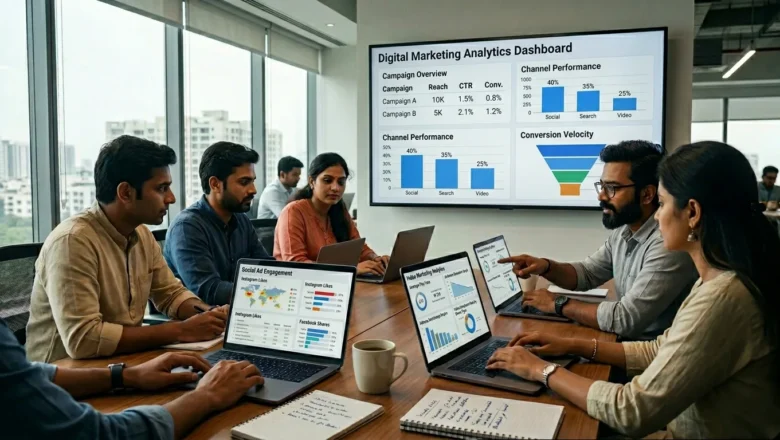
AI-powered analytics platforms are helping marketers understand customer behavior in greater detail.
By analyzing data across websites, advertising platforms, and social media channels, AI can identify patterns in how audiences interact with content.
These insights allow businesses to make faster decisions about campaign strategies, budgets, and targeting.
Personalization Becomes a Core Marketing Strategy
Personalization is another area where AI is driving major change.
AI systems can analyze user behavior and deliver highly targeted marketing experiences, including:
- Personalized product recommendations
- Customized email campaigns
- Dynamic website content
This level of personalization helps businesses improve customer engagement and increase conversion rates.
Why Some Companies Still Struggle to Measure AI ROI
Despite the rapid adoption of AI tools, some organizations still face challenges measuring the return on investment from AI initiatives.
Common issues include:
- Misaligned marketing metrics
- Pilot projects that never scale across teams
- Poor integration between AI tools and marketing platforms
For AI marketing initiatives to succeed, businesses must align technology adoption with clear business objectives and measurable performance indicators.
The Future of AI-Driven Marketing Technology
Looking ahead, AI-Driven Marketing Tech in 2026 is expected to become even more integrated into marketing operations.
Rather than replacing marketers, AI technologies will increasingly support strategic decision-making by handling large volumes of data and automating operational workflows.
Companies that combine AI capabilities with human creativity and marketing strategy will be better positioned to compete in an increasingly digital marketplace.
Frequently Asked Questions
What is AI-Driven Marketing Technology?
AI-Driven Marketing Technology refers to the use of artificial intelligence tools to automate marketing processes, analyze customer data, and optimize campaigns across digital platforms.
How are companies using AI in marketing in 2026?
Businesses use AI for automation, predictive analytics, SEO optimization, content generation, customer support chatbots, and personalized marketing campaigns.
Does AI replace human marketers?
No. AI supports marketers by automating repetitive tasks and analyzing data, while humans focus on strategy, creativity, and brand messaging.
Why do some AI marketing projects fail?
Common reasons include poor integration with existing marketing systems, unclear objectives, lack of skilled talent, and pilot projects that never scale.
How does AI improve marketing performance?
AI improves marketing by automating campaign optimization, enabling personalization, analyzing large datasets, and providing predictive insights for better decision-making.
Final Takeaway
AI-Driven Marketing Tech in 2026 is reshaping how businesses plan, execute, and optimize marketing strategies. From automation and generative content to predictive analytics and personalization, AI tools are enabling brands to operate faster and more efficiently.
AI-powered marketing strategies for smarter growth can explore Digilogy which supports modern digital marketing transformation.