

Meta’s New Commerce Push on Instagram and Facebook Changes Social Selling

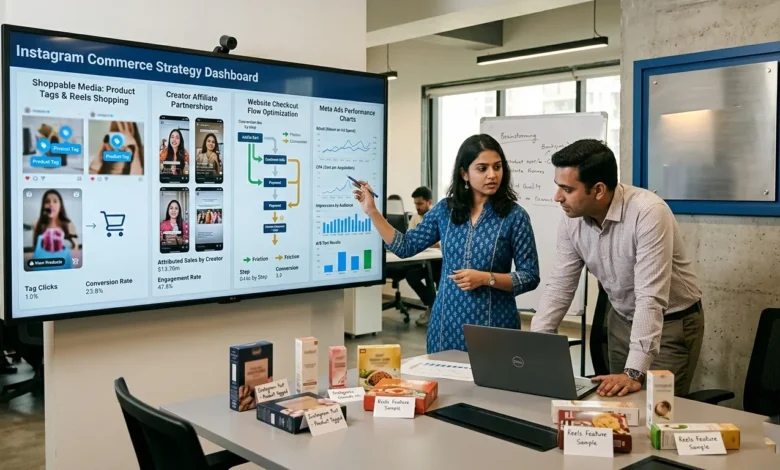
Meta is changing how commerce works across Instagram and Facebook, and the shift matters for brands that depend on social media to drive product discovery, website traffic, and online sales.
The update is not only about Shops or product pages. It reflects a larger move toward creator-led discovery, affiliate product links, AI-supported shopping, Reels commerce, and website-based checkout.
For businesses, Meta’s New Commerce Push on Instagram creates both an opportunity and a responsibility.
Instagram can still help users discover products through Reels, product tags, creator content, collections, ads, and shop surfaces. But the final purchase journey now depends more heavily on the brand’s own website.
Meta says Shops on Facebook and Instagram now use website checkout, meaning customers can discover products on Facebook and Instagram but complete purchases on the business website.
What Is Meta’s New Commerce Push on Instagram?
Meta’s New Commerce Push on Instagram refers to Meta’s wider effort to make Instagram and Facebook stronger platforms for product discovery and social commerce.
Instead of relying only on in-app Shops and native checkout, Meta is strengthening commerce through creators, Reels, product links, affiliate partnerships, AI shopping support, and Meta Ads.
This means Instagram is becoming more than a visibility platform.
A user may first see a product in a Reel, creator post, ad, product tag, or brand profile. From there, they may move to the brand’s website to complete the purchase.
For brands, this means social media, e-commerce, paid ads, product catalogues, website checkout, and analytics must work together.
Why Meta Is Moving Away From Direct In-App Checkout
Meta has shifted Shops on Facebook and Instagram toward website checkout.
According to Meta’s business help documentation, Shops now direct customers to the seller’s website to complete the purchase. Businesses that previously used checkout on Facebook or Instagram are affected by this change.
This gives brands more control over the checkout experience.
It also gives them more control over order fulfilment, returns, customer data, payment experience, taxes, and post-purchase communication.
However, it also increases responsibility for brands.
If the website is slow, confusing, poorly designed, or not mobile-friendly, users may leave before completing the purchase.
Why the SERP Shows a Bigger Social Commerce Shift
The SERP around this topic highlights three major search interests: checkout changes, creator affiliate programs, and AI-driven shopping.
This means users are not only searching for a basic Instagram shopping update.
They want to understand how Meta’s changes affect brands, creators, checkout, product discovery, and social selling.
The AI Overview also highlights a shift from direct in-app checkout to creator-led and affiliate-driven commerce.
For brands, the new playbook is no longer just “set up a Shop.”
The new playbook is to connect creator content, product discovery, ad campaigns, product catalogues, landing pages, website checkout, and analytics.
Creator Affiliate Programs Are Becoming Central
Creators are becoming more important in Meta’s commerce strategy.
Meta’s help documentation says creators can join affiliate programs from partners such as Shopee and Amazon, browse affiliate products, and share them in posts or Reels to earn commissions on sales.
This makes creator content more directly connected to product discovery and sales.
Earlier, creators often had to send users to a link in bio, coupon code, or external storefront.
Now, product discovery can happen more naturally inside Reels, posts, and social content.
For brands, this increases the value of influencer partnerships, UGC creators, product demos, creator reviews, and performance-focused content collaborations.
Why Reels Are Important for Social Commerce
Reels are becoming one of the most important formats for Instagram commerce.
They allow brands and creators to show how a product looks, works, feels, and fits into real life.
A product image may show what the item is.
A Reel can show why someone should care about it.
This is useful for categories such as fashion, beauty, skincare, jewellery, home decor, electronics, food, fitness, and lifestyle products.
When creators can tag or link products within content, Reels become more than an awareness format.
They become a bridge between product discovery and purchase intent.
How AI Is Supporting Meta’s Commerce Push
AI is also becoming part of Meta’s commerce direction.
Meta says it is introducing new ways for creators to recommend products while making it easier for people to use AI to discover new products.
Reports also show Meta is using generative AI to provide more product and brand information to shoppers across Instagram and Facebook.
For brands, this means product information must be accurate, complete, and easy to understand.
Weak product titles, unclear descriptions, poor images, missing details, and outdated catalogues can reduce trust in the buying journey.
As AI becomes more involved in product discovery, clean product data becomes more important.
Why Website Checkout Matters More Now
Website checkout is now a key part of Instagram commerce.
If Instagram creates product interest but the website fails to convert that interest, the sale may be lost.
This makes mobile-first e-commerce design essential.
Product pages should load quickly, display clear images, explain pricing, show delivery details, include return information, and make checkout simple.
The journey from Instagram to the product page should feel natural.
If a user clicks from a Reel about a specific product, they should land on that exact product page, not a generic homepage.
What This Means for E-Commerce Brands
For e-commerce brands, Meta’s New Commerce Push on Instagram changes the role of the website.
The website is no longer just the final step.
It becomes the main conversion engine after Instagram creates demand.
Brands need to optimise product pages, category pages, checkout flows, payment options, tracking, and remarketing.
They also need to ensure that Meta Pixel, Conversions API, product catalogues, campaign URLs, and analytics are properly configured.
Without proper tracking, brands may not know which Reel, creator post, ad, or product tag helped drive the sale.
FAQs
What is Meta’s New Commerce Push on Instagram?
Meta’s New Commerce Push on Instagram refers to Meta’s shift toward creator-led product discovery, affiliate product links, AI shopping tools, Reels commerce, and website checkout.
It changes Instagram from a simple engagement platform into a stronger social commerce discovery channel.
Is Meta removing in-app checkout from Instagram Shops?
Meta has shifted Shops on Facebook and Instagram to website checkout.
Customers can still discover products through Shops, but they are directed to the business website to complete the purchase.
Why is Meta focusing on website checkout?
Website checkout gives businesses more control over payments, fulfilment, returns, taxes, customer data, and post-purchase communication.
However, it also means brands must improve website speed, mobile checkout, and product page quality.
How do creator affiliate programs help Instagram commerce?
Creator affiliate programs allow creators to promote products and earn commissions from sales.
This helps brands use trusted creator content to drive product discovery and purchase intent.
Are Reels important for Instagram shopping?
Yes, Reels are important because they show products in action.
They can support product demonstrations, creator reviews, customer stories, launch campaigns, and social proof.
What should brands improve after this Meta commerce update?
Brands should improve product pages, mobile checkout, product catalogues, website speed, Meta Pixel, Conversions API, retargeting, and Instagram content strategy.
How does this affect Indian e-commerce brands?
Indian e-commerce brands can use Instagram for product discovery, creator-led trust, Reels visibility, and paid ads.
But they must ensure that the website, WhatsApp support, payment options, and delivery information are strong enough to convert users.
What is the biggest risk for brands?
The biggest risk is creating interest on Instagram but losing users on the website.
A slow, confusing, or poorly designed checkout flow can reduce sales even when Instagram content performs well.
Does Meta’s commerce push compete with TikTok Shop?
Meta’s updates show that it is strengthening its social commerce model as creator-led shopping grows across platforms.
Instagram and Facebook are being positioned more strongly around product discovery, creators, and commerce journeys.
What should small businesses do first?
Small businesses should update their Instagram profile, improve product pages, check catalogue links, simplify mobile checkout, and create Reels that explain product value clearly.
Final Takeaway
As Meta’s New Commerce Push on Instagram changes how users discover and buy products, brands need more than regular posting.Digilogy helps businesses connect social media marketing, Meta Ads, e-commerce strategy, content creation, and website optimisation into one clear growth journey.To turn Instagram visibility into stronger product discovery, better traffic, and measurable conversions, connect with Digilogy today.