

PMAR Report: Digital Advertising Drives ₹1.55 Lakh Crore India Ad Market

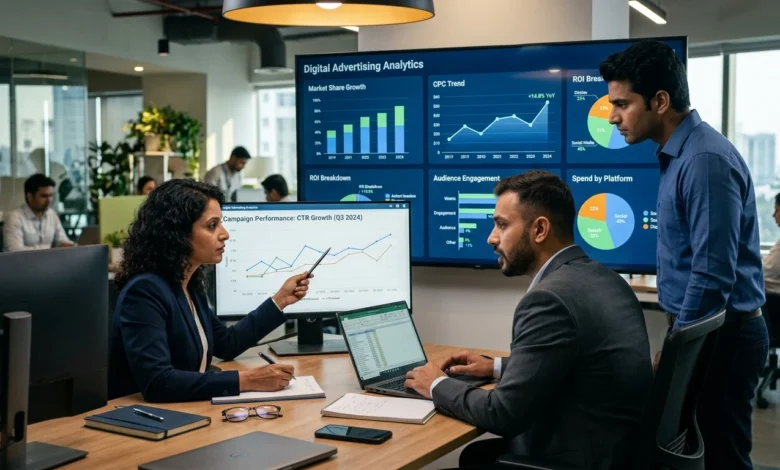
India’s advertising industry is undergoing a major structural shift as digital media takes a leading role in marketing investments. According to recent reports from the Pitch Madison Advertising Report (PMAR), digital channels are now the primary growth engine of the country’s expanding advertising market.
The report highlights how digital spending is reshaping media planning and advertising strategies across industries.
India’s Advertising Market Reaches ₹1.55 Lakh Crore
The PMAR India Advertising Report estimates the country’s ad market at approximately ₹1.55 lakh crore under an expanded definition that includes emerging digital segments.
Under this broader measurement framework, digital media now accounts for around 60% of total advertising expenditure, while traditional media holds roughly 40%.
This shift marks a significant transformation in India’s advertising ecosystem.
Digital Advertising Becomes the Primary Growth Driver
Digital channels have steadily gained momentum over the past decade.
Under the earlier market definition, digital advertising accounted for about 46% of India’s advertising expenditure, while traditional media remained dominant.
However, once digital commerce advertising and MSME spending are included, digital’s share crosses the majority threshold, signaling a structural realignment in the market.
Key Drivers of Digital Advertising Growth
Several emerging sectors are accelerating digital advertising investments across India.
Quick Commerce advertising
Rapid delivery platforms are increasingly investing in performance marketing campaigns to drive customer acquisition.
Retail media networks
E-commerce marketplaces are expanding advertising formats that allow brands to promote products directly within online retail environments.
MSME digital spending
Small and medium businesses are allocating larger portions of their marketing budgets to digital platforms.
Together, these segments are becoming key contributors to India’s advertising growth.
Quick Commerce and Retail Media Expansion
Quick commerce advertising has become one of the fastest-growing digital advertising categories.
Platforms such as Blinkit, Zepto, and Swiggy Instamart are creating new performance-driven advertising opportunities for brands.
Retail media and quick commerce advertising together represent a rapidly expanding segment that connects marketing directly with purchase intent.
MSME Advertising Power
Small and medium-sized businesses are also playing an increasingly important role in digital advertising growth.
According to recent estimates, MSME digital advertising spending reached tens of thousands of crores, growing steadily year after year.
These businesses collectively represent a large share of digital advertising demand and are helping expand the overall market.
Traditional Media Faces Structural Changes
While digital channels are expanding rapidly, traditional media continues to remain an important part of India’s advertising mix.
Television, print, radio, outdoor, and cinema advertising still contribute significant audience reach.
However, many brands are now adopting a digital-first media strategy, layering traditional media campaigns on top of data-driven digital planning.
Why the Advertising Market Is Changing
The growth of digital infrastructure, mobile internet adoption, and performance marketing tools has fundamentally reshaped how brands allocate advertising budgets.
Advertisers increasingly prefer digital platforms because they provide:
- real-time performance measurement
- precise audience targeting
- flexible budget allocation
These capabilities are making digital channels central to modern marketing strategies.
Final Takeaway
The PMAR India Advertising Report highlights a decisive shift toward digital-first advertising strategies.
As digital platforms account for a growing share of marketing investments, brands are restructuring media planning around data-driven channels. Digilogy observes that businesses aligning their advertising strategies with digital performance channels are better positioned to compete in India’s evolving marketing ecosystem.