

Google Performance Max AI: How Predictive Automation Is Reshaping ROI in 2026

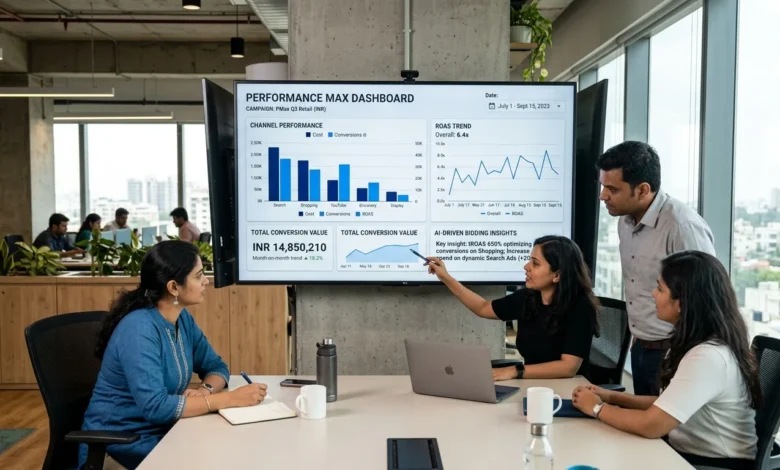
Google Performance Max has become one of the clearest examples of how AI is changing paid media from manual optimization to predictive decision-making. It gives advertisers access to Google’s inventory from a single campaign and automates bidding, budget optimization, audiences, creatives, and attribution.
For marketers, that means Performance Max is no longer just a convenience feature. It is increasingly a campaign type built to identify intent signals in real time and push spend toward combinations of users, channels, and assets that are more likely to drive conversion value.
What Google Performance Max Actually Does
Performance Max is a goal-based campaign type that runs across Search, YouTube, Display, Discover, Gmail, and Maps from one campaign. Google positions it as a way to help advertisers find more converting customers across its full inventory using automation and Smart Bidding.
The system uses advertiser inputs such as budget, goals, creative assets, conversion tracking, and audience signals. Google AI then determines where ads should serve and what bids to place in auctions most likely to meet the business objective.
How Performance Max Uses AI to Predict ROI
Performance Max relies heavily on Smart Bidding and attribution signals to predict which impressions and auctions are most likely to produce high-value outcomes. Google’s Maximize conversion value strategy is specifically built to drive the highest total conversion value within budget, with optional Target ROAS controls for profitability goals.
That predictive layer matters because the platform is not reacting only to past clicks. It is evaluating auction-time signals, user intent, and channel opportunities in real time to prioritize traffic more likely to convert.
Predictive Search Trends and Demand Signals
One of the strongest advantages of Performance Max is its ability to adapt to changing demand across Google surfaces. Google says the campaign type is built to help advertisers keep up with evolving consumer demand and capture performance opportunities in real time.
Performance Max reporting has also expanded. Google introduced richer reporting on channel performance, search terms, and assets, giving advertisers clearer visibility into where performance is coming from and how demand is shifting.
Smart Bidding Is the Core Prediction Engine
At the center of Performance Max is Smart Bidding. Google’s bidding systems use AI to tailor bids for each auction and maximize either conversions or conversion value depending on campaign goals.
For advertisers focused on ROI, that means the platform is increasingly optimized for value-based decision-making, not just volume. When conversion values are properly configured, the system can push harder toward higher-value customers and outcomes.
Audience Signals Still Matter, Even With Automation
Although Performance Max automates much of audience expansion, Google still recommends feeding the system strong audience signals. These include Customer Match, first-party customer lists, and custom segments based on search terms, URLs, and apps your customers engage with.
Google explicitly says consented first-party data from previous purchasers is among the most valuable signals you can provide. Refreshing those lists frequently helps the system make optimization decisions using more current inputs.
Creative Optimization Is a Major ROI Lever
Performance Max does not separate media and creative as cleanly as traditional manual campaign structures. Creative assets are part of the optimization system itself.
Google provides asset group reporting and top ad combination insights so advertisers can evaluate which assets and combinations contribute most to campaign performance. Asset optimization is described by Google as key to campaign success.
That makes creative quality more important than many advertisers assume. Strong inputs improve the system’s ability to match the right message to the right user across multiple channels.
Why Value-Based Bidding Matters More in 2026
Google’s guidance increasingly emphasizes Maximize conversion value and Target ROAS for businesses that want stronger profit alignment. Rather than chasing low-value conversions, advertisers can train the system to optimize for revenue contribution and business value.
This is one reason Performance Max is often tied to stronger retail and ecommerce outcomes. Google says the campaign type helps retailers increase sales and optimize ROI across Google Ads channels, including Maps and Shopping-related inventory.
Reported Uplift Compared With Older Campaign Approaches
Google has published several performance comparisons tied to Performance Max adoption. It says advertisers upgrading Smart Shopping campaigns to Performance Max saw an average 12% increase in conversion value at the same or better ROAS, while advertisers beyond retail saw an average 27% more conversions or value at a similar CPA/ROAS. Google also previously said advertisers using Performance Max in their accounts saw an average 13% total incremental conversions at a similar CPA.
These averages should not be treated as guaranteed outcomes, but they do show how Google positions Performance Max: not only as automation, but as a campaign type expected to produce incremental value when configured well.
Better Reporting Has Made PMax More Actionable
One of the biggest early criticisms of Performance Max was limited visibility. That has changed.
Google has introduced more transparency through placement reports, channel reporting, search term insights, asset reporting, and top-signal views that help advertisers understand what is driving results.
This does not make Performance Max fully manual. But it does make it easier to diagnose performance shifts and optimize inputs rather than guessing.
What Marketers Should Focus On Now
The marketer’s role is not disappearing. It is shifting.
Google itself frames AI-powered campaign types as tools that work best when advertisers provide strong business inputs, accurate conversion tracking, first-party data, useful audience signals, and high-quality creative assets.
In practice, that means marketers should focus on:
- clear conversion values and ROAS goals
- strong first-party audience inputs
- creative variety and asset quality
- clean measurement and attribution
- regular review of channel, asset, and search insights
These are the levers that help automation perform better.
FAQs
What is Google Performance Max?
Performance Max is a goal-based Google Ads campaign type that lets advertisers access Google inventory across Search, YouTube, Display, Discover, Gmail, and Maps from one campaign.
How does Performance Max improve ROI?
It uses Google AI to automate bidding, budget optimization, audience expansion, creatives, and attribution to pursue more conversions or higher conversion value.
Does Performance Max use Smart Bidding?
Yes. Smart Bidding is a core part of Performance Max and helps tailor bids in real time for each auction based on campaign goals.
Are audience signals still important in Performance Max?
Yes. Google recommends using signals like Customer Match and custom segments to help Performance Max find the right customers faster.
Can advertisers see which channels are performing?
Yes. Google has expanded Performance Max reporting to include channel performance, search term insights, placement reports, and asset-level reporting.
Does Performance Max usually outperform older shopping setups?
Google says advertisers upgrading Smart Shopping campaigns to Performance Max saw an average 12% increase in conversion value at the same or better ROAS.
Final Takeaway
Google Performance Max is turning ROI optimization into a more predictive system. It combines Smart Bidding, audience signals, creative automation, and multi-channel delivery to help advertisers find higher-value opportunities across Google inventory.
The bigger shift is strategic.
As automation handles more bidding and distribution decisions, marketers need to spend more time improving inputs, measurement, and asset quality. Digilogy tracks these industry developments closely. For daily updates and insights.