

Programmatic Advertising Continues to Disrupt Traditional TV Ad Spend

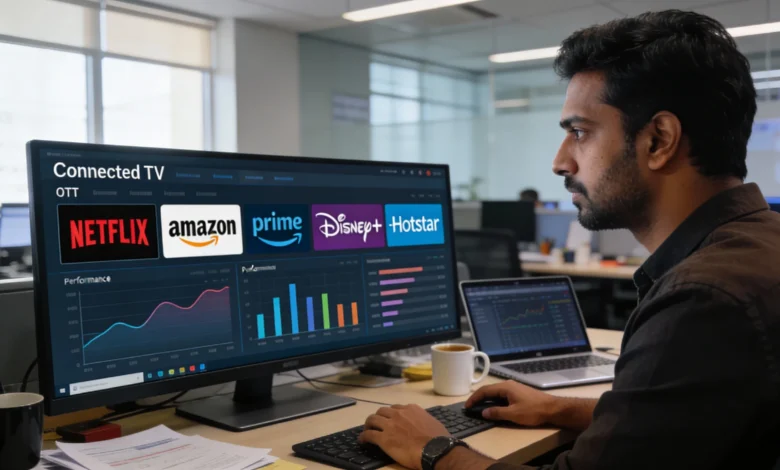
Recently, programmatic advertising has continued to reshape how brands allocate television budgets. As audiences migrate from linear TV to connected TV (CTV) and OTT platforms, advertisers are increasingly prioritising automated, data-driven buying models that offer greater targeting precision, transparency, and measurable performance across screens.
Key Developments
Traditional television advertising has faced sustained pressure as viewership patterns change. Linear TV ad expenditure has shown limited growth in recent years, supported largely by in-stream and digital extensions rather than classic broadcast formats.
According to recent reports, advertising budgets are steadily shifting toward connected TV and OTT platforms. Internet-enabled televisions, streaming services, and on-demand video platforms now command a growing share of viewing time, forcing advertisers to follow audiences beyond conventional TV slots.
Programmatic advertising has emerged as the primary enabler of this transition. By automating ad buying through real-time bidding and demand-side platforms (DSPs), advertisers can purchase CTV, OTT, mobile, and desktop inventory within a single, unified ecosystem.
This shift has reduced reliance on manual negotiations, fixed pricing, and long-term insertion orders that once defined traditional TV advertising. Instead, campaigns can now be optimised dynamically based on performance signals and audience behaviour.
Industry & Expert Context
The rise of programmatic advertising is closely tied to advancements in data availability, machine learning, and addressable media. Connected TV environments allow advertisers to apply digital-style targeting—such as household attributes, content preferences, and viewing behaviour—to what was once a broad, reach-focused medium.
Industry entities including PwC, major DSP providers, and OTT platforms have highlighted that a significant portion of CTV inventory is now transacted programmatically. This reflects a broader industry move toward precision targeting rather than buying guaranteed impressions against general demographics.
Advertisers are also leveraging multi-format programmatic strategies, combining CTV with display, audio, native, and mobile video to build consistent cross-device journeys. This convergence has blurred the line between traditional TV advertising and digital media buying.
Why This Matters
For brands, the disruption of traditional TV ad spend represents a fundamental change in how media effectiveness is measured and optimised. Programmatic advertising enables clearer visibility into metrics such as impressions, completion rates, CPA, ROAS, and incremental reach.
Smaller and mid-sized businesses, previously priced out of premium TV inventory, now have access to high-quality placements through programmatic CTV buying. This democratisation of access has widened participation in video advertising.
For audiences, the shift brings more relevant ad experiences. Instead of generic messaging aimed at broad demographics, viewers are increasingly exposed to ads aligned with their interests, viewing habits, and content preferences.
What Happens Next
Earlier this week, industry analysts noted that investment in programmatic CTV is expected to continue rising as streaming ecosystems mature. Advertisers are likely to place greater emphasis on advanced measurement models, including view-through attribution and multi-touch analysis.
As privacy regulations evolve, first-party data strategies and contextual targeting are expected to play a larger role in programmatic TV buying. Platforms that balance addressability with compliance will be better positioned to attract long-term advertiser confidence.
Traditional TV is unlikely to disappear, but its role is shifting—from a dominant mass medium to one component within a broader, data-driven video strategy.
Final Takeaway
Programmatic advertising continues to redefine how television ad spend is planned, executed, and measured. The migration toward connected TV and automated buying reflects a deeper industry move toward accountability, flexibility, and performance-driven media investment.
Digilogy tracks these developments closely as brands reassess how programmatic and CTV strategies fit into modern media planning. For ongoing insights into advertising and digital media trends, visit the Digilogy News page.