


UGC Equity Regulations Spark Social Backlash as BJP Flags Constitutional Concerns

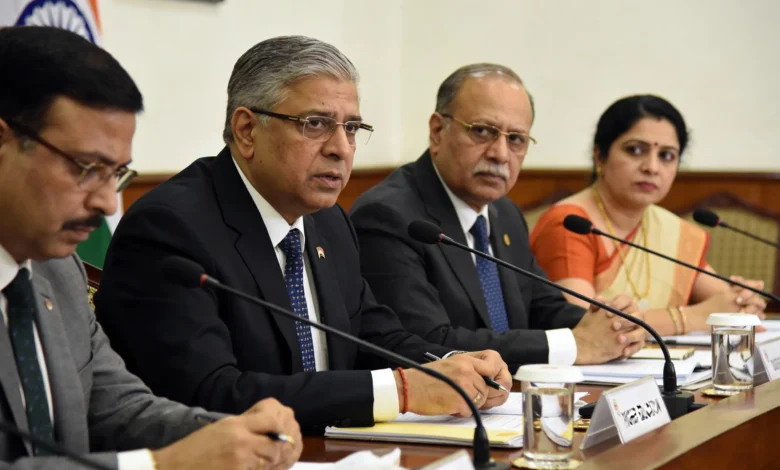
The UGC Equity Regulations have triggered widespread debate across India’s higher education ecosystem. Political leaders, legal experts, and student groups are questioning whether the framework balances social justice with constitutional equality, as concerns emerge over grievance access, safeguards, and regulatory clarity.
UGC Equity Regulations: What the New Framework Introduces
The University Grants Commission recently notified the Equity Regulations with the stated objective of preventing caste-based discrimination in higher education institutions.
The framework introduces mandatory Equity Committees, Equal Opportunity Centres, and 24/7 grievance mechanisms, aiming to ensure faster redressal and institutional accountability.
Supporters view the regulations as a structural correction to long-standing institutional gaps. Critics argue that implementation details raise constitutional and procedural questions.
BJP’s Kalraj Mishra Raises Constitutional Objections
BJP leader Kalraj Mishra has publicly criticised the UGC Equity Regulations, calling them unconstitutional and alleging that they institutionalise caste-based differentiation.
He stressed that students from all social backgrounds must have equal rights to file grievances, warning that selective eligibility could undermine the principle of equality before law.
Mishra also urged clarity on procedural safeguards to prevent misuse and ensure fairness.
Key Issues Highlighted by Critics
Exclusion of General Category Stakeholders
A key point of contention centres on Regulation 3(c), which defines caste-based discrimination primarily in relation to SC, ST, and OBC communities.
Critics argue that students from the general category can also face caste-linked bias, and excluding them from grievance mechanisms could create legal and ethical inconsistencies.
Absence of Penalties for False Complaints
Another concern is the removal of explicit punitive measures against malicious or false complaints in the final version of the regulations.
Faculty groups and legal observers warn this could encourage misuse and weaken trust in institutional processes.
Surveillance and Due Process Concerns
The introduction of Equity Squads and continuous monitoring mechanisms has raised fears of excessive surveillance on campuses.
Opponents argue that the burden of proof may shift unfairly onto the accused, potentially chilling academic discussion and dissent.
Support from Regional Political Leadership
Tamil Nadu Chief Minister M. K. Stalin has defended the regulations, calling them a delayed but necessary reform in a system affected by entrenched discrimination.
He cited concerns over student well-being in higher education institutions and emphasised the need for stronger institutional safeguards for historically marginalised communities.
Engagement with the Education Ministry
Kalraj Mishra met Dharmendra Pradhan to formally convey objections and seek revisions.
The Education Minister has stated that clarifications will be issued to address concerns and prevent misinterpretation, signalling that the framework remains open to refinement.
Legal and Political Status
According to recent reports, the regulations are under judicial scrutiny, with questions raised about whether their current form risks social fragmentation rather than inclusion.
The issue has also triggered intra-party debate, with differing views emerging across states on how equity frameworks should be structured.
Why the UGC Equity Regulations Matter
The UGC Equity Regulations represent a significant shift in how discrimination complaints are handled in Indian higher education.
Their final impact will depend on clarity of definitions, fair grievance access, and balanced enforcement, ensuring that equity mechanisms strengthen trust rather than deepen divisions.
FAQs: UGC Equity Regulations Explained
What are the UGC Equity Regulations?
The UGC Equity Regulations establish institutional mechanisms to prevent caste-based discrimination and address grievances within higher education institutions.
Why are the regulations being criticised?
Critics argue the framework excludes certain stakeholders, lacks safeguards against false complaints, and raises concerns over due process and surveillance.
Who raised objections to the UGC Equity Regulations?
BJP leader Kalraj Mishra has flagged constitutional and procedural concerns, while other political leaders have expressed both support and opposition.
Is the UGC reviewing the regulations?
Yes. The Education Ministry has indicated that clarifications may be issued to address concerns raised by stakeholders.
Final Takeaway
As debate around the UGC Equity Regulations continues, policymakers face the challenge of balancing social justice objectives with constitutional safeguards and institutional trust.
Industry observers such as Digilogy, which tracks policy developments impacting education, governance, and digital systems, note that regulatory clarity will be key to long-term acceptance and effective implementation.