

Mobile Usage Dominates as People Stay Indoors and Off Work

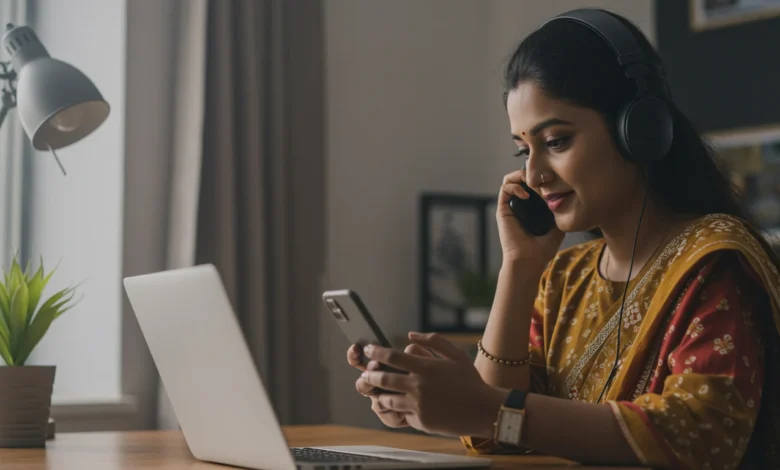
Mobile usage dominates daily digital activity as people continue spending more time indoors due to remote work and changing lifestyles. According to recent reports, smartphones have become central to communication, entertainment, and work, marking a long-term shift rather than a temporary behavioral change.
Key Developments
Recent data confirms a sharp rise in time spent on mobile devices during periods of indoor living.
Studies indicate that average daily smartphone usage has increased significantly compared to pre-pandemic levels.
According to recent reports, nearly 70% of internet users increased smartphone usage during lockdowns.
In countries such as India, an estimated 70–80% of mobile data consumption now occurs indoors.
App usage patterns have also shifted.
Social media and entertainment apps saw strong growth, while navigation and outdoor utility apps declined due to reduced physical movement.
Industry & Expert Context
Researchers studying digital behavior link increased mobile usage to remote work, home confinement, and blended work-life routines.
Frameworks such as the Circumplex Model of Affect and Role Theory are now used to assess emotional states and social roles through device interaction.
Mental well-being has emerged as a key area of focus.
Increased reliance on mobile devices has helped researchers analyze stress, engagement, and emotional balance during prolonged indoor activity.
In India, the Telecom Regulatory Authority of India (TRAI) has acknowledged the indoor connectivity gap.
TRAI has introduced a digital readiness star-rating system for buildings to improve indoor mobile coverage and infrastructure planning.
Why This Matters
When mobile usage dominates daily routines, its impact extends beyond convenience.
Smartphones now influence productivity, communication habits, and emotional well-being.
For businesses, mobile devices have become essential work tools.
According to industry statistics, a majority of organizations rely on employees using personal devices for work-related access and collaboration.
From a public infrastructure perspective, indoor connectivity is now a critical requirement.
Weak indoor coverage affects work efficiency, digital access, and service reliability across sectors.
What Happens Next
Experts expect mobile usage patterns to remain elevated even as hybrid work models stabilize.
The shift toward indoor-first digital behavior is increasingly viewed as permanent.
Telecom providers and regulators are likely to prioritize indoor network performance.
Building-level digital infrastructure may soon be treated as essential as power and water planning.
Researchers are also expanding studies on mobile interaction data to better understand mental health trends.
Future insights could influence workplace design, digital wellness policies, and mobile technology standards.
Final Takeaway
Mobile usage dominates not only how people communicate, but how they work, relax, and manage daily life.
What began as a response to confinement has evolved into a structural shift in digital behavior.
As an industry observer, Digilogy tracks how changing mobile usage patterns shape digital ecosystems, workplace strategies, and user engagement models. For ongoing updates and insights, visit the Digilogy News page.