

FMCG Firms Expect Demand Revival in H2 FY26 After Trade Disruption in September

A Recovery Story Taking Shape After a Disrupted Quarter
India’s FMCG sector entered FY26 with mixed sentiment. September brought an unexpected slowdown as trade disruption, stocking delays, and supply-chain adjustments created short-term turbulence across markets. But as the dust settles, companies are increasingly confident that an FMCG demand revival is building for the second half of the year.
The sector has seen phases like this before—periods where operations tighten temporarily, only to rebound strongly once trade stabilizes. This time, the underlying drivers remain healthy, setting the stage for a measured but firm comeback.
Why September Felt Harder Than Usual
The September disruption was not a demand problem—it was structural. Distributor realignments, billing changes, and cautious stocking behaviour from retailers created a visible dip. Yet, household consumption patterns did not weaken at the core. Consumers did not abandon categories; they simply delayed certain purchases as retail shelves adjusted.
This distinction matters. It signals that the slowdown was mechanical, not emotional. And that is why companies are predicting FMCG demand revival with greater confidence heading into H2 FY26.
Rural Markets Hold the Key Once Again
One of the strongest reasons behind optimism is rural India. For months, rural sentiment has been slowly improving—supported by prospects of a better crop cycle, more stable cash flows, and continued reliance on everyday essentials.
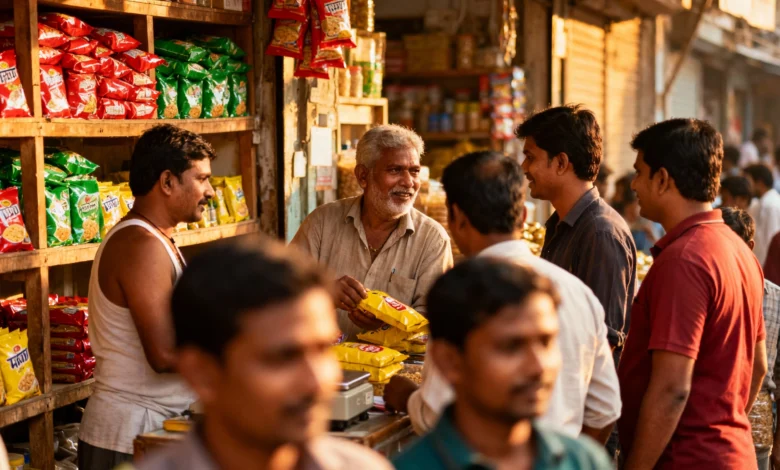
The resilience of rural consumers is often understated. Even during a disrupted September, the base-level buying behaviour in rural markets didn’t fall drastically. The expectation is that rural demand will lead the FMCG demand revival, supported by stronger distribution, rising mobility, and steady need for low-unit packs across categories.
Urban Markets Are Stabilizing Faster Than Expected
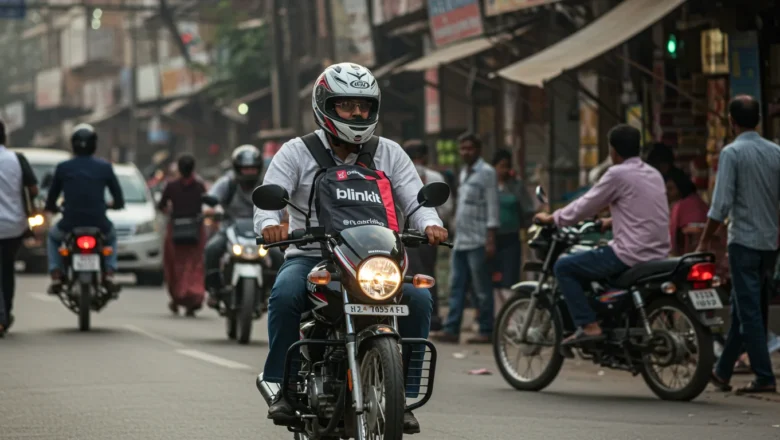
Urban consumption saw a sharper dip during the disruption due to channel recalibration and trade negotiations, but it is also where the quickest bounce-back is visible. Modern trade, e-commerce, and quick-commerce platforms retained strong momentum, offering FMCG firms continuous visibility even when traditional trade slowed.
These platforms help brands offset temporary shocks and maintain continuity—a key factor supporting the FMCG demand revival narrative across metros and Tier 1 markets.
The Categories Leading the Comeback
Early signals indicate that essentials are already recovering at a healthy pace. Food staples, beverages, personal wash, detergents, and home hygiene categories have shown steady restocking through October. These are the categories that determine the direction of FMCG demand revival, as they form the backbone of purchase baskets in both rural and urban households.
Premium categories will take longer to accelerate, but they aren’t expected to drag the sector down. The combination of stable mass segments and gradually improving premium segments strengthens the outlook for H2 FY26.
Why FMCG Companies Are Confident About FY26
Beyond sentiment, there are structural reasons behind this optimism. Distribution networks have normalized quickly after September. Retailers are carrying healthier inventory levels again. Logistical friction has eased, and order cycles are returning to familiar patterns.
Brands are also preparing for festive and post-festive demand, which typically fuels the strongest legs of FMCG demand revival each year. When supply-chain rhythm returns and consumer behaviour stays intact, the revival becomes a natural outcome.
A Year That Highlights the Need for Adaptability
FY26 is shaping up to be a lesson in agility. Companies that responded faster—through better communication with trade partners, smarter inventory planning, and stronger last-mile execution—are already seeing smoother transitions. Those who rely on deeper analytics and localized strategies are positioned even better for the FMCG demand revival unfolding across the next two quarters.
India’s consumption story remains fundamentally strong. Disruptions are temporary. Demand is persistent. And the trajectory heading into H2 FY26 reflects this truth clearly.
Strengthen Your FMCG Strategy with Digilogy
In a market where consumer sentiment and trade dynamics shift quickly, brands need sharper insights, stronger digital visibility, and region-specific strategies to win consistently. Digilogy helps FMCG companies accelerate growth using intelligent marketing frameworks, performance-led execution, and local market understanding. Get started with Digilogy today and build a growth strategy ready for FY26 and beyond.