

LinkedIn Video Content Sees Sharp Growth in B2B Engagemen

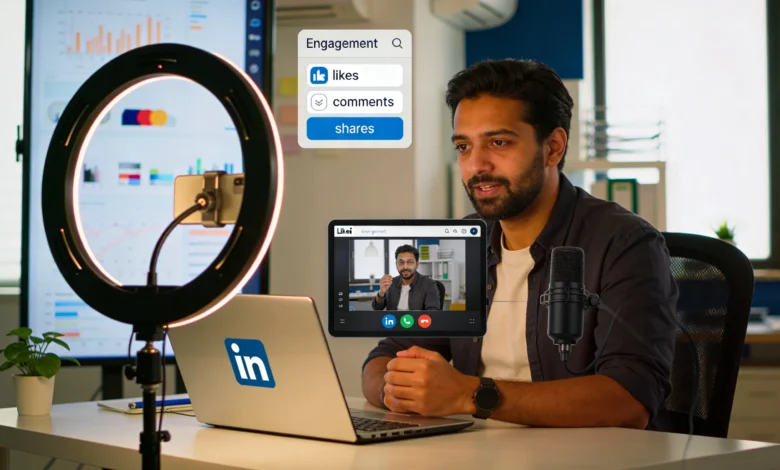
LinkedIn Video Content Sees Sharp Growth in B2B Engagement as decision-makers increasingly prefer visual, digestible insights over static formats.
According to recent reports, video viewership and creation on LinkedIn have accelerated significantly, positioning video as a dominant format for B2B marketing strategy.
Video Becomes the Default B2B Language
Video is emerging as the primary communication format on LinkedIn.
B2B buyers are turning to short, informative clips to explore products, evaluate solutions, and understand complex ideas.
This shift reflects changing attention patterns in professional networks.
Key Growth Indicators
Recent platform data highlights measurable expansion.
- Video viewership has grown significantly year over year.
- Video creation is increasing at a faster pace than static posts.
- Engagement rates for video consistently outperform text-only updates.
These trends indicate sustained momentum rather than short-term spikes.
Why B2B Audiences Prefer Video
Professional buyers seek clarity and authenticity.
Video enables brands to:
- Demonstrate product functionality
- Humanize leadership teams
- Explain technical solutions visually
- Build credibility through real-world use cases
In complex industries, visual explanation reduces cognitive load.
Winning Video Content Trends
Analysis of high-performing LinkedIn videos reveals distinct patterns.
Vertical and Mobile-First Formats
Mobile consumption dominates platform usage.
Short, vertical videos align with scrolling behavior and improve completion rates.
Strong Opening Hooks
High-performing videos capture attention within the first few seconds.
Clear value statements outperform generic introductions.
Executive and Founder-Led Content
Leadership visibility builds trust.
Posts featuring CEOs and industry experts often generate stronger engagement than brand-only messaging.
Story-Driven Narratives
Rather than highlighting features, brands increasingly focus on real customer outcomes and industry challenges.
This narrative approach improves relatability.
The Role of AI in B2B Video Production
AI-assisted editing tools are reshaping content workflows.
Platforms such as Canva, Descript, and CapCut streamline editing, captioning, and optimization.
AI also supports:
- Auto-caption generation
- Engagement analysis
- Thumbnail testing
- Performance benchmarking
These tools reduce production barriers while raising quality expectations.
Strategic Best Practices for B2B Brands
Industry experts recommend the following:
- Prioritize accessibility with captions
- Keep awareness-stage videos concise
- Use longer formats for technical education
- Optimize for silent viewing
- Repurpose webinars into short-form clips
Consistency and authenticity remain critical differentiators.
Impact on B2B Marketing Strategy
LinkedIn Video Content Sees Sharp Growth in B2B Engagement because it aligns with evolving buyer behavior.
Decision-makers prefer insight delivered through demonstration rather than static claims.
Video also supports multi-stage funnel strategies:
- Awareness through short insights
- Consideration via product walkthroughs
- Decision-stage testimonials
This versatility strengthens ROI potential.
Frequently Asked Questions
Why is LinkedIn video growing in B2B marketing?
B2B buyers increasingly prefer concise, visual explanations. Video simplifies complex topics and builds trust faster than text-only formats.
What types of LinkedIn videos perform best?
Short, mobile-first videos with strong opening hooks, executive presence, and practical insights tend to generate higher engagement.
How long should B2B LinkedIn videos be?
For awareness, videos under 30 seconds perform well. Longer formats work better for detailed product explanations and thought leadership.
Does AI improve LinkedIn video marketing?
Yes. AI tools assist with editing, captions, performance analytics, and optimization, making video production more efficient and scalable.
Industry Outlook
LinkedIn Video Content Sees Sharp Growth in B2B Engagement as professional audiences adopt visual-first learning behaviors.
The platform is increasingly positioning video as a central discovery and decision-making tool.
Brands that align storytelling with data-backed insights are likely to sustain higher engagement levels.
Digilogy tracks these industry developments closely. For daily updates and insights, visit the Digilogy News page.