

Platform-Owned E-Commerce Tools Challenge Traditional Retail Models

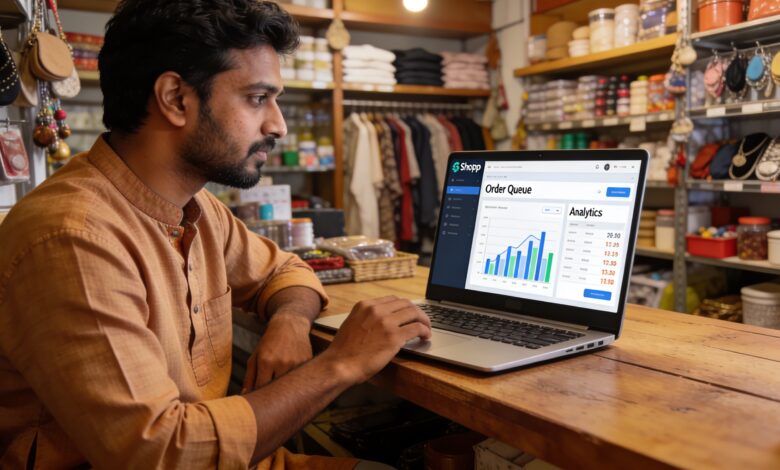
Platform-Owned E-Commerce Tools Challenge Traditional Retail by shifting commerce from physical-first stores to digital-first, data-driven ecosystems.
According to recent reports, platforms such as Amazon, Shopify, Flipkart, and JioMart are reshaping consumer behavior through advanced logistics, personalized shopping, and scalable digital infrastructure.
Digital-First Platforms Redefine Retail Structure
Retail is moving from storefront dependency to platform ecosystems.
Platform-owned e-commerce tools integrate payments, logistics, customer data, and marketing automation into centralized systems.
This consolidation increases efficiency and strengthens competitive advantage.
Key Forces Disrupting Traditional Retail
Several structural changes are accelerating this transformation.
1. Decline in Foot Traffic
As consumers prioritize convenience and variety, physical stores face reduced visitor volume.
Online platforms offer broader selection and price transparency, influencing purchasing behavior.
2. Operational and Technological Gap
Traditional retailers often lack:
- Advanced logistics infrastructure
- AI-driven recommendation engines
- Real-time inventory visibility
- Integrated CRM systems
Platforms operate with scalable cloud-based systems that optimize supply chains and fulfillment processes.
3. Data Control and Customer Insights
E-commerce platforms capture granular customer data.
This enables predictive analytics, personalized recommendations, and dynamic pricing strategies.
Traditional retailers struggle to match this level of insight without digital integration.
4. Cost Leadership and Convenience
Platform ecosystems leverage economies of scale.
Competitive pricing, fast shipping, and simplified return processes raise consumer expectations across the retail landscape.
Adaptation Strategies for Traditional Retailers
Despite disruption, traditional retail is not obsolete.
Hybrid transformation models are emerging.
Omnichannel Integration
Retailers are combining physical presence with digital storefronts.
Strategies include:
- Online ordering with in-store pickup
- QR-code-enabled payments
- Social media commerce integration
- Mobile-first customer engagement
This model blends offline trust with online convenience.
Embracing Digital Tools
Solutions such as Shopify and WooCommerce allow retailers to build online stores without extensive technical expertise.
Cloud-based platforms reduce entry barriers to digital commerce.
Differentiation Through Experience
Physical stores retain strengths in:
- Personalized service
- Immediate product access
- Community engagement
- Brand immersion
Retailers focusing on experiential value can offset pricing disadvantages.
Impact on Consumer Behavior
Consumers increasingly favor:
- Fast checkout experiences
- Larger product assortments
- Transparent pricing comparisons
- Seamless delivery tracking
The rise of digital marketplaces has reshaped purchasing psychology toward efficiency and instant gratification.
Regulatory and Competitive Considerations
The expansion of platform-owned ecosystems has triggered discussions around:
- Private-label product dominance
- Data control
- Market concentration
- Fair competition frameworks
Regulatory conversations continue as digital platforms expand influence.
Double-Edged Transformation
Platform-Owned E-Commerce Tools Challenge Traditional Retail by introducing both disruption and opportunity.
While non-digitized retailers face market pressure, digital transformation opens new channels for:
- Growth
- Data-driven decision-making
- Operational efficiency
- Customer-centric innovation
Retail evolution now depends on adaptability rather than resistance.
Frequently Asked Questions
What are platform-owned e-commerce tools?
Platform-owned e-commerce tools are integrated systems provided by digital marketplaces that combine storefront creation, logistics, payment processing, and analytics within a single ecosystem.
How do these tools impact traditional retail?
They reduce reliance on physical stores by offering scalable digital infrastructure, lower operational costs, and data-driven personalization.
Can traditional retailers compete with large platforms?
Yes, through omnichannel strategies, hybrid fulfillment models, experiential retail, and digital integration using cloud-based commerce tools.
Why is data important in modern retail?
Customer data enables predictive analytics, targeted marketing, dynamic pricing, and improved inventory management, increasing competitiveness.
Final takeawy
Platform-Owned E-Commerce Tools Challenge Traditional Retail as digital ecosystems consolidate logistics, analytics, and consumer engagement within unified platforms.
The future retail landscape will likely reflect hybrid coexistence rather than total replacement.
Digilogy tracks these industry developments closely. For daily updates and insights, visit the Digilogy News page.