

Search CPC Inflation Moderates After Early-January Spike

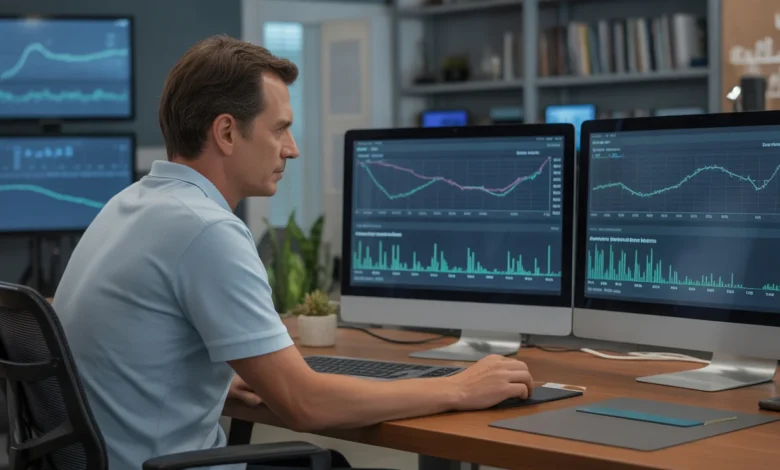
Search advertising costs have recently shown signs of stabilisation after an early-January spike in cost-per-click across several industries.
Following a period of heightened competition and budget resets, CPC inflation appears to be moderating as auction dynamics and advertiser behaviour adjust.
This shift reflects broader patterns in how search markets respond to seasonal and economic pressure.
Key Developments
According to recent reports, CPC inflation in search advertising typically follows predictable seasonal patterns.
Early-year increases often coincide with budget resets and renewed competition for high-intent keywords.
After the initial surge, CPCs tend to stabilise as bidding strategies recalibrate.
Advertisers adjust targeting, budgets, and bidding logic to align with performance outcomes.
Industry observations indicate that while overall click supply remains constrained, demand is becoming more selective.
This shift has reduced extreme volatility in auction pricing following the early-January spike.
Industry & Expert Context
Search CPC inflation functions similarly to broader economic inflation.
As more advertisers compete for a limited pool of high-intent queries, prices naturally rise.
Search Engine Land and WordStream have previously highlighted how AI-driven bidding models influence auction outcomes.
Smart bidding prioritises conversion probability, often pushing CPCs higher for valuable traffic.
Platform changes, including evolving ad layouts and privacy-driven signal limitations, have also affected click availability.
Fewer clicks, combined with higher-quality demand, continue to shape pricing behaviour.
Why This Matters
Moderating CPC inflation provides advertisers with improved cost predictability after a volatile start to the year.
Stability allows teams to plan budgets and performance targets with greater confidence.
Higher CPCs do not necessarily indicate weaker outcomes.
In many cases, reduced click volume is offset by stronger conversion intent and better lead quality.
Advertisers that prioritise relevance, landing page experience, and audience quality are better positioned to manage costs.
What Happens Next
Search advertising is expected to remain competitive as AI-driven optimisation becomes more sophisticated.
Future CPC movement will likely depend on auction density, economic conditions, and platform changes.
Advertisers are expected to rely more heavily on first-party data and conversion-focused strategies.
Diversifying into complementary channels may also reduce over-dependence on high-cost search traffic.
As the market matures, efficiency rather than volume is likely to define performance success.
Final Takeaway
Search CPC inflation moderating after the early-January spike signals a return to more balanced auction dynamics.
While costs remain elevated compared to previous years, volatility is easing as strategies adapt.
Digilogy tracks these shifts closely as part of its ongoing analysis of paid media and search performance trends.
Advertisers that focus on relevance, data integration, and conversion quality are better equipped to navigate rising costs