
Google Ads in April 2026: The Performance Changes That Matter Most

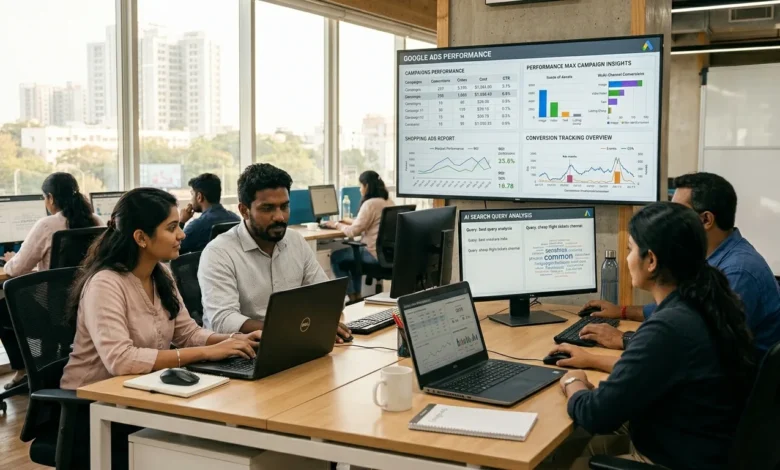
Google Ads in April 2026 is moving beyond traditional keyword matching. Search is becoming more conversational, visual, and discovery-led as users ask longer questions, compare options, and expect faster answers.
For advertisers, this means ads are no longer limited to standard search placements. They are becoming part of AI-powered discovery, where the right ad can guide users from inspiration to action.
Why Google Ads Is Changing in 2026
Search behaviour has changed. People are no longer typing only short keywords like “running shoes,” “Google Ads agency,” or “best hotels.”
They now ask detailed questions such as “Which running shoes are best for daily office travel?” or “Which Google Ads agency can improve lead quality for a Chennai business?”
This shift is forcing advertisers to rethink how campaigns are structured. Google’s AI systems now rely on landing page quality, creative assets, product feeds, audience signals, and conversion data to understand user intent.
Google has also highlighted that AI Mode creates new opportunities for businesses to appear naturally inside conversational search journeys, especially when users compare brands, products, and stores.
AI Max for Search Becomes a Major Campaign Upgrade
AI Max for Search is one of the most important Google Ads updates in 2026. It helps Search campaigns move beyond manually selected keywords by using Google AI to match ads with broader user intent.
Google introduced AI Max for Search campaigns to help advertisers expand into relevant queries they may not have added manually. It uses existing keywords, creative assets, URLs, broad match signals, and keywordless technology to find new performance opportunities.
This does not mean keywords are disappearing. It means advertisers need to combine keyword strategy with AI-powered intent matching.
What Advertisers Should Do With AI Max
Advertisers should not activate AI Max without preparation. The feature works best when campaigns already have strong landing pages, clear conversion goals, and accurate tracking.
A good approach is to test AI Max in selected campaigns first. Advertisers should monitor search term insights, final URL behaviour, asset performance, CPA, ROAS, and lead quality before scaling.
For service businesses, this is especially important. More conversions are useful only when those conversions become qualified enquiries, phone calls, bookings, or sales.
AI Mode Creates a New Search Advertising Surface
AI Mode is changing how users interact with Search. Instead of typing one query and clicking one result, users can ask follow-up questions and move through a more guided discovery process.
Google has been testing new ad formats in AI Mode to connect inspiration with action. This gives businesses a chance to appear when users are still comparing options, not only when they are ready to buy.
For advertisers, this creates a new visibility layer. Campaigns must now be ready for conversational questions, comparison searches, and AI-generated decision journeys.
Ads Are Becoming More Helpful, Not Just More Visible
The biggest change in Google Ads in April 2026 is not only where ads appear. It is how ads function inside the user journey.
Ads are becoming more assistive. They can support product comparison, offer discovery, service evaluation, and purchase decisions.
This means generic ad copy will become weaker over time. Brands need useful messages, clear offers, strong landing pages, and content that answers real customer questions.
Performance Max Needs Stronger Human Control
Performance Max continues to play a major role in Google Ads. But in 2026, advertisers need to manage it more actively.
Performance Max should not be treated as a set-and-forget campaign. Budget allocation, creative performance, audience exclusions, asset groups, and conversion quality need regular review.
For lead generation campaigns, CRM tracking is essential. Without offline conversion tracking or lead quality feedback, campaigns may optimise for form fills instead of actual business outcomes.
First-Party Audience Exclusions Become More Important
First-party audience exclusions are becoming more useful for advertisers who want cleaner campaign performance. They help separate new customer acquisition from existing customers or remarketing audiences.
This is important because many campaigns appear to perform well while spending budget on people who already know the brand. Exclusions can help advertisers focus more clearly on fresh demand.
For Indian businesses in real estate, education, healthcare, B2B, and local services, this can reduce wasted spend and improve reporting accuracy.
AI Max Expands Into Shopping Campaigns
Google has also introduced AI Max for Shopping campaigns. This update helps retailers reach shoppers when discovery begins, not only when users search for exact product names.
AI Max for Shopping uses Merchant Center feeds to understand product context, including details such as material, fit, fabric softness, durability, and other product attributes.
This makes product feed optimisation more important. Titles, descriptions, images, availability, pricing, shipping details, and return policies can all affect how products appear in AI-powered shopping journeys.
FAQs
What are the new Google Ads updates in 2026?
The major Google Ads updates in 2026 include AI Max, AI Mode ads, Shopping campaign upgrades, Performance Max controls, Demand Gen growth, CTV opportunities, and agentic commerce features.
What is AI Max in Google Ads?
AI Max is a Google Ads feature that uses AI to expand Search campaign reach, match ads to user intent, optimise assets, and find relevant queries beyond fixed keyword lists.
How does AI Mode affect Google Ads?
AI Mode affects Google Ads by creating conversational search journeys where ads can appear naturally when users compare products, services, brands, and next steps.
Is Google Ads worth it in 2026?
Google Ads is worth it in 2026 when campaigns use accurate tracking, strong landing pages, high-quality creative assets, clear goals, and regular optimisation.
How should businesses prepare for Google Ads in April 2026?
Businesses should test AI Max, improve conversion tracking, optimise landing pages, clean product feeds, review Performance Max controls, and strengthen creative assets.
Final Takeaway
Google Ads in April 2026 shows that advertising is moving from keyword matching to intent understanding. AI Max, AI Mode, Performance Max, Shopping, Demand Gen, CTV, and agentic commerce are all part of this shift.
The brands that perform better will be the ones that prepare their data, content, creative, feeds, and measurement systems early.
Digilogy helps businesses plan and optimise Google Ads campaigns for this AI-led advertising environment. From Search and Performance Max to landing page strategy, conversion tracking, and campaign optimisation, Digilogy can help brands build ad campaigns that are ready for the next stage of digital growth.