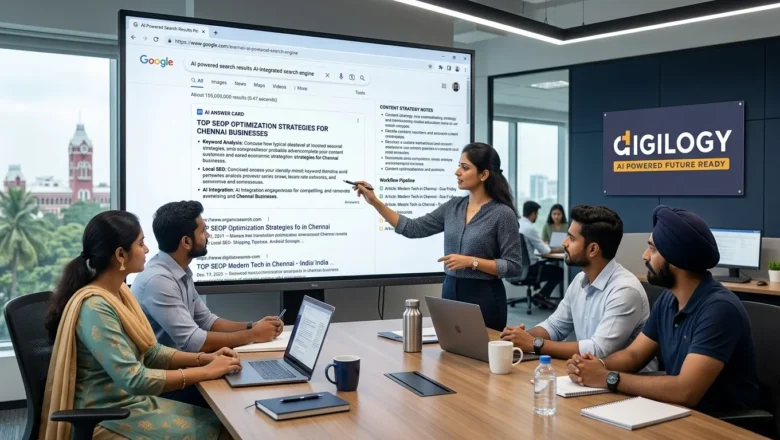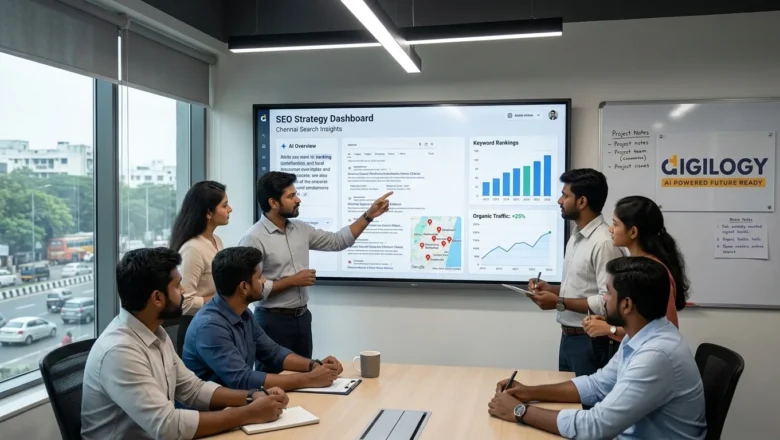



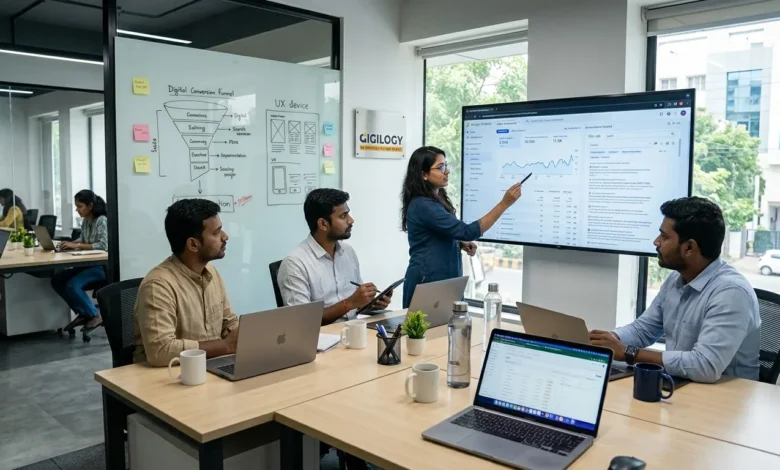
Search Experience Optimization is the process of improving the full journey from Google search to website conversion. It connects SEO, user experience, and conversion rate optimization so visitors do not just click your page, but also take action.
Many businesses rank well but still struggle with leads. The reason is simple. Traffic without trust, speed, relevance, or a clear call to action rarely converts.
For Chennai businesses, this matters even more. A user searching for a local clinic, IT service, real estate brand, or training institute expects fast answers, mobile-friendly pages, and simple enquiry options.
What Is SXO?
SXO means Search Experience Optimization. It improves how users find, read, trust, and act on your website after clicking from search results.
Traditional SEO focuses on visibility. SXO focuses on visibility plus action. It asks one important question: did the visitor find value and move closer to conversion?
At Digilogy, SXO is viewed as the bridge between rankings and revenue. It helps brands move beyond traffic reports and focus on qualified leads, enquiries, bookings, and sales.
SXO vs SEO: What Is the Difference?
SEO helps users discover your website. SXO helps them complete the next step after discovery.
| Area | SEO | SXO |
| Main goal | Rankings and traffic | Traffic and conversions |
| Focus | Keywords, indexing, backlinks | Intent, UX, CRO, trust |
| Metrics | Impressions, clicks, rankings | Engagement, leads, sales |
| User role | Searcher | Searcher and converter |
| Key outcome | Visibility | Business action |
SEO and UX now work together. A page that ranks but loads slowly, feels confusing, or lacks trust signals can lose valuable organic leads.
Search Experience Optimization connects content relevance, website engagement, and conversion funnel optimization into one strategy.
Why SEO Traffic Does Not Always Convert
SEO traffic fails when the page does not match the user’s search intent. Visitors leave when they cannot quickly find answers, pricing signals, proof, or the next step.
Common conversion blockers include:
- Slow page speed
- Weak mobile experience
- Poor landing page optimization
- Unclear service information
- No trust signals
- Long forms
- Weak CTA placement
- Mismatch between title and content
For example, a Chennai user searching “affordable SEO services Chennai” may want pricing clarity, local proof, and a quick consultation option. A generic article will not satisfy that intent.
That is why search intent optimization is the starting point of SXO.
How Search Experience Optimization Turns Traffic into Conversions
Search Experience Optimization turns traffic into conversions by aligning the user’s query, page content, design, and CTA.
A good SXO journey looks like this:
- Search intent: The page answers the exact query.
- Content relevance: The user sees useful information fast.
- User experience optimization: The page loads well and feels easy.
- Trust signals: Reviews, case studies, FAQs, and proof reduce doubt.
- Clear call to action: The user knows what to do next.
- Conversion tracking: Leads and actions are measured.
Digilogy recommends mapping each blog, service page, and landing page to one clear user journey. This avoids mixed intent and improves organic traffic conversion through SEO conversion optimization.
Key Elements of a Strong SXO Strategy
An effective Search Experience Optimization strategy includes SEO, UX, CRO, analytics, and local relevance.
1. Search Intent Optimization
Search intent optimization means matching your content to what users actually want.
A user searching “what is SXO” needs a simple explanation. A user searching “SEO conversion rate improvement” needs tactics, tools, and measurement steps.
Do not force commercial keywords into informational content. Add them naturally through examples, related service sections, and soft CTAs.
2. Landing Page Optimization
Landing page optimization improves the page users visit after clicking from Google.
A strong page should include:
- A clear headline
- Fast-loading content
- Simple navigation
- Helpful visuals
- Trust-building proof
- Short forms
- A clear call to action
For Chennai service businesses, add local references. Mention service areas, industries, and common customer expectations.
3. Page Speed Optimization
Page speed optimization supports both user satisfaction and SEO performance.
Google’s Core Web Vitals measure loading performance, interactivity, and visual stability. Google recommends LCP within 2.5 seconds, INP under 200 milliseconds, and CLS below 0.1 for good user experience.Review the Google Core Web Vitals guidelines before optimizing page speed and UX.
Slow pages increase bounce rate reduction challenges. Users often leave before seeing your offer, form, or phone number.
4. Mobile Experience
Most local searches happen in high-intent moments. Users may compare brands while commuting, shopping, or researching nearby options.
A strong mobile experience includes readable text, tap-friendly buttons, quick-loading images, sticky CTAs, and simple enquiry forms.
For Chennai audiences, mobile-first design is essential for clinics, institutes, real estate brands, SaaS companies, and local service providers.
5. Conversion Rate Optimization
Conversion rate optimization improves the percentage of visitors who take action.
This can include better CTA copy, shorter forms, stronger testimonials, pricing clarity, improved page layout, and better internal links.
Digilogy maps CRO elements to the user journey instead of adding random buttons. Each CTA should match the visitor’s current awareness level.
SXO Metrics You Should Track
Search Experience Optimization should be measured with both SEO and conversion metrics.
| Metric | Why It Matters |
| Organic clicks | Shows search visibility |
| Engagement rate | Shows page usefulness |
| Dwell time | Shows content value |
| Bounce rate | Shows friction or mismatch |
| Scroll depth | Shows content engagement |
| Form submissions | Shows lead generation from SEO |
| Calls or WhatsApp clicks | Shows local conversion intent |
| SEO conversion rate | Shows organic traffic quality |
Use Google Search Console, Google Analytics 4, heatmaps, CRM data, and user behavior analytics together.
Digilogy uses these signals to find where users drop off. This helps improve website engagement and conversion paths.
Chennai Example: How SXO Works in Practice
Imagine a Chennai-based training institute gets organic traffic for “digital marketing course in Chennai.” The page ranks well but receives few enquiries.
An SXO audit may find these issues:
- The course fee is hidden
- The page loads slowly
- Student outcomes are unclear
- The form asks too many questions
- The CTA appears only at the bottom
- Mobile navigation is confusing
The solution is not only more SEO. The page needs better UX, clearer content, stronger proof, and improved conversion flow.
This is where Digilogy helps brands connect SEO traffic with real enquiries through a local SEO strategy for Chennai businesses.
SXO Checklist for Better Conversions
Use this checklist before publishing any SEO page:
- Does the page answer the main query in the first paragraph?
- Is the content useful for the user’s intent?
- Does the page load fast on mobile?
- Are CTAs visible and relevant?
- Is the content easy to scan?
- Are trust signals included?
- Are internal links helpful?
- Is the next step clear?
- Are conversions tracked properly?
- Is the page updated for current search behavior?
Search Experience Optimization is not a one-time task. It improves through testing, tracking, and refinement.
Why SXO Matters for Chennai Businesses
Chennai has competitive search markets across healthcare, education, SaaS, real estate, ecommerce, finance, and professional services.
Users compare many brands before contacting one. They look for local trust, fast answers, reviews, clear pricing signals, and easy communication.
Search Experience Optimization helps local businesses reduce friction and increase qualified enquiries from existing traffic.
For Digilogy, the goal is simple: help Chennai brands convert organic visibility into measurable growth with digital marketing services in Chennai. 
FAQs
What is SXO in digital marketing?
SXO improves the journey from Google search to conversion by combining SEO, UX, and CRO.
How is SXO different from SEO?
SEO brings traffic. SXO helps traffic engage, trust, and convert.
Why is Search Experience Optimization important?
Search Experience Optimization matters because rankings alone do not create leads or sales.
What are the main SXO metrics?
Key SXO metrics include bounce rate, dwell time, engagement rate, form submissions, calls, and SEO conversion rate.
How can Chennai businesses use SXO?
Chennai businesses can use SXO to improve mobile pages, local trust, content clarity, and enquiry paths.
Does SXO improve conversion rate?
Yes. SXO improves conversions by matching intent, reducing friction, and guiding users with clear CTAs.
From SEO Traffic to Real Conversions: Final Takeaway
Search Experience Optimization helps businesses turn search visibility into leads, enquiries, and sales. It makes SEO more useful by improving the full user journey.
For Chennai brands, SXO is no longer optional. Users expect fast pages, helpful content, trust signals, and simple next steps.
Get a Free Consultation with Digilogy today to improve your SEO traffic, user experience, and conversion performance.